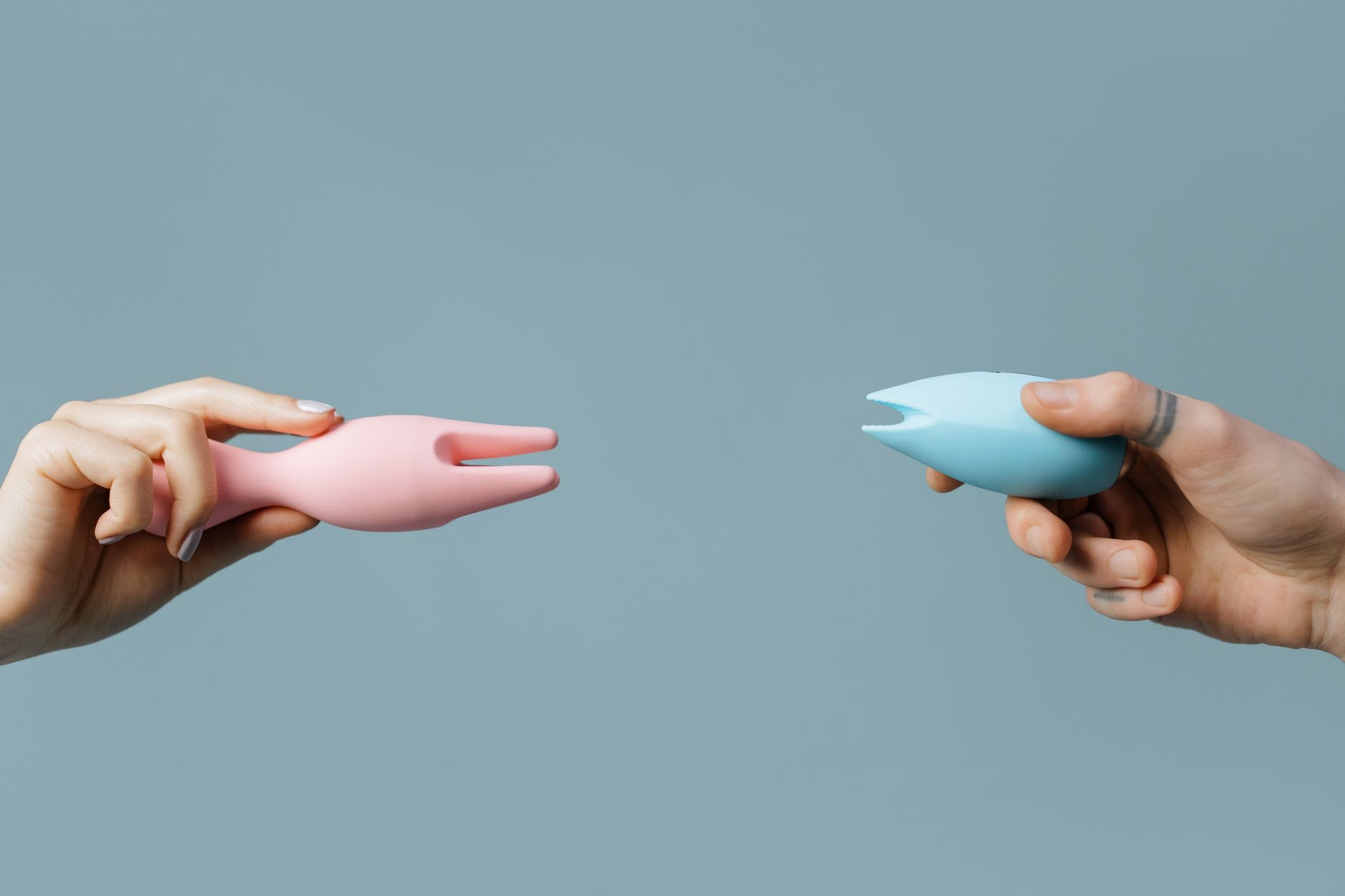
Here's the real problem nobody talks about
Bringing a toy into the bedroom feels simple in theory. In practice, if your partner already feels awkward about their body, a lemon vibrator can read as judgment. Like you're saying: "I need this because you're not enough." Which is absolutely not what you mean. But that's what their insecurity hears.
I've worked with hundreds of couples navigating this exact tension. The couples who actually succeed aren't the ones who ignore body image stuff. They're the ones who name it directly, build in safety first, and then introduce pleasure toys from a place of shared curiosity instead of fix-it energy.
Let's talk about how to do that.
Why body image fears surface around toys
Body insecurity isn't really about the body. It's about control, visibility, and vulnerability. When you suggest a toy, your partner is suddenly aware of being watched. They're performing. They're worried about how they look from that angle. They're catastrophizing about what the toy "means" about their attractiveness.
Add in the fact that clitoral vibrators are literally designed to feel better than manual stimulation, and now their brain is running: "They want this because I can't give them what they need." Logically false. Emotionally? That's the story they're telling themselves.
The toy hasn't created the insecurity. It's just lit a flare on something that was already there.
Have the conversation before the toy arrives
Don't surprise someone with a lemon vibrator and hope it goes well. That's a setup for shame.
Instead, have a real conversation when you're clothed, not in bed, and not in crisis mode. Say something like: "I've been thinking about trying some things that might feel good for both of us. I was interested in exploring a lemon clitoral vibrator. Before we do anything, I want to check in about how that lands for you. I'm interested in your pleasure. That's the whole point."
Then actually listen. Your partner might say:
"I feel weird being watched." Okay. That's fixable. You can agree to focus on how it feels, not how anyone looks.
"I think it means you're not satisfied with me." That's the real one. Address it directly: "That's not what this is. My body responds to certain kinds of stimulation. So does yours. This is about us both feeling good. Nothing more."
"I'm worried it'll be too intense." Great. You can start on lower settings together.
"I'm not sure I'm ready." Respect that. Don't push.
The conversation itself is the foreplay. It's the thing that builds safety.
Start with lemon adult toys as a partnered activity, not a solo performance
Here's the shift that changes everything: don't position the toy as something for them. Position it as something for both of you.
Try it like this. You're touching each other. You're already aroused. Then you introduce the lemon vibrator as an addition, not a replacement. You use it on them, yes. But you're fully present. You're kissing them. You're talking to them. You're making it collaborative.
A lot of partners with body image struggles relax the moment they realize the toy isn't a weapon. It's a tool for connection. The toy becomes less about "you need this to finish" and more about "let's explore what feels good together."
Start on a lower intensity setting. Let them feel how it works without any pressure to orgasm. Sometimes the first session is just getting used to the sensation. That's totally fine.
Make it about what you BOTH discover, not what's "wrong" with them
This is crucial. Never frame a lemon vibrator like it's fixing something.
Instead of: "I think this will help you come faster." Try: "I'm curious what this feels like for you. Let's see what happens."
Instead of: "You'll probably like this better than what I do." Try: "I want to try this together and see where it takes us."
The language matters because it shifts the frame from "you're broken" to "we're exploring." Your partner with body image struggles needs to feel chosen, not optimized.
One thing I tell couples: share your own pleasure in the process. If you're using the toy on your partner, let them see that you're turned on by their response. Let them hear you enjoying it. That's the feedback loop that kills shame.
Address the visibility issue directly
Some partners struggle specifically with being watched while the toy is involved. Their brain goes into self-consciousness overdrive.
Take that off the table. Dim the lights. Agree that you're both focusing on sensation, not sight. Try it with your eyes closed. Turn your bodies so they're not facing you head-on while being stimulated.
You can also suggest that they use a lemon clitoral vibrator on themselves while you're present but not watching intensely. Sometimes just having you nearby without the direct gaze takes the pressure off.
The goal is reducing performance anxiety, not reducing intimacy. Experiment until something feels safe.
Connect the experience to something you actually want together
This is where it gets real: if your partner's body image struggle is deep, a toy alone won't fix it. But you can use the toy as an entry point to a bigger conversation about desire and bodies.
After you've tried a lemon vibrator together, talk about what you discovered. Did something feel surprisingly good? Did you learn something about your partner's body you didn't know? Did they relax at some point?
Use those moments as proof points. "When you stopped thinking and just felt, you were so hot." "I loved watching you respond to that." "I want you to know that watching you enjoy yourself is exactly what turns me on."
You're essentially re-training their nervous system around pleasure. You're replacing the story "my body is something to hide" with "my body is something worth paying attention to."
When to bring in a professional
If your partner's body image struggle is severe enough that even soft, collaborative toy use triggers shame spirals, that's a sign the root issue needs more support than you can provide alone.
A therapist who specializes in body image and sexuality can help your partner untangle why their body feels so dangerous to them. That's real work, and it's not your job to fix.
What you can do is be patient and keep showing up with curiosity instead of judgment. Introduce tools like a lemon vibrator when they feel ready. Don't make the toy the solution. Make it one part of a bigger process of rebuilding trust with their own body.
The long game with lemon sexual toys and body confidence
This won't be solved in one session. Body insecurity has usually been there for years. Pleasure is the antidote, but only over time.
What I've noticed with couples who stick with this: after a few successful sessions with a clitoral vibrator, something shifts. The shame quiets down. Your partner starts to realize their body is capable of feeling something new. They stop seeing the toy as judgment and start seeing it as an invitation.
Read more about how to introduce lemon vibrators to your partner without awkwardness for additional communication frameworks. You might also find it helpful to explore how lemon vibrators rebuild intimacy after emotional distance, since body image struggles and emotional distance often travel together.
The vibrators themselves are well-designed. But they only work if the emotional container is safe first. Build that container, and everything else becomes possible.
Frequently asked questions
What if my partner refuses to try a lemon vibrator because of body image?
Don't push. Pushing will confirm their fear that you want them to change. Instead, drop the conversation for a few weeks. Keep showing them you're attracted to their body through touch, words, and presence. When shame quiets, curiosity usually follows.
Can using a lemon clitoral vibrator together actually improve body image?
Yes, gradually. Pleasure is a powerful antidote to shame. When your partner realizes their body can feel that much, the story shifts from "my body is wrong" to "my body is capable." But it takes time and repetition.
Should I hide the toy if my partner is embarrassed?
Not in a way that deepens shame. Instead, keep it somewhere neutral and accessible, not hidden like it's illicit. The goal is to normalize it as part of your shared pleasure, not something to be ashamed of.
How do I respond if my partner says the toy makes them feel "replaced"?
Take it seriously. Say something like: "That's not what this is. I want you more, not less. This is about us both feeling amazing together. What would help you feel secure?" Then actually incorporate their answer.
Is it okay to use a lemon vibrator if we're working through a lot of relationship stuff?
Depends on the severity. If you're in active conflict or rebuilding after infidelity, toys can feel premature. Get back to basic safety and trust first. Once you're connected again, reintroduce pleasure tools gradually.
What intensity should we start with if my partner is self-conscious?
Begin on setting 1 or 2 on a lemon vibrator. Low intensity feels less intense, less exposing. It's also easier to turn up than to come down when someone is already nervous. Let them control the increase.
The real ending
Body image and pleasure are intertwined. You can't separate them. But you can't fix shame with a toy alone either. What works is patience, directness, and showing your partner through action that their body is exactly what you want. A well-designed lemon clitoral vibrator makes that easier. But the real tool is you showing up with curiosity instead of frustration.
Ready to have the conversation? Start small, listen hard, and remember: this isn't about the toy. It's about permission. You're giving your partner permission to feel good in a body they've been afraid of. That takes trust. Build it first.