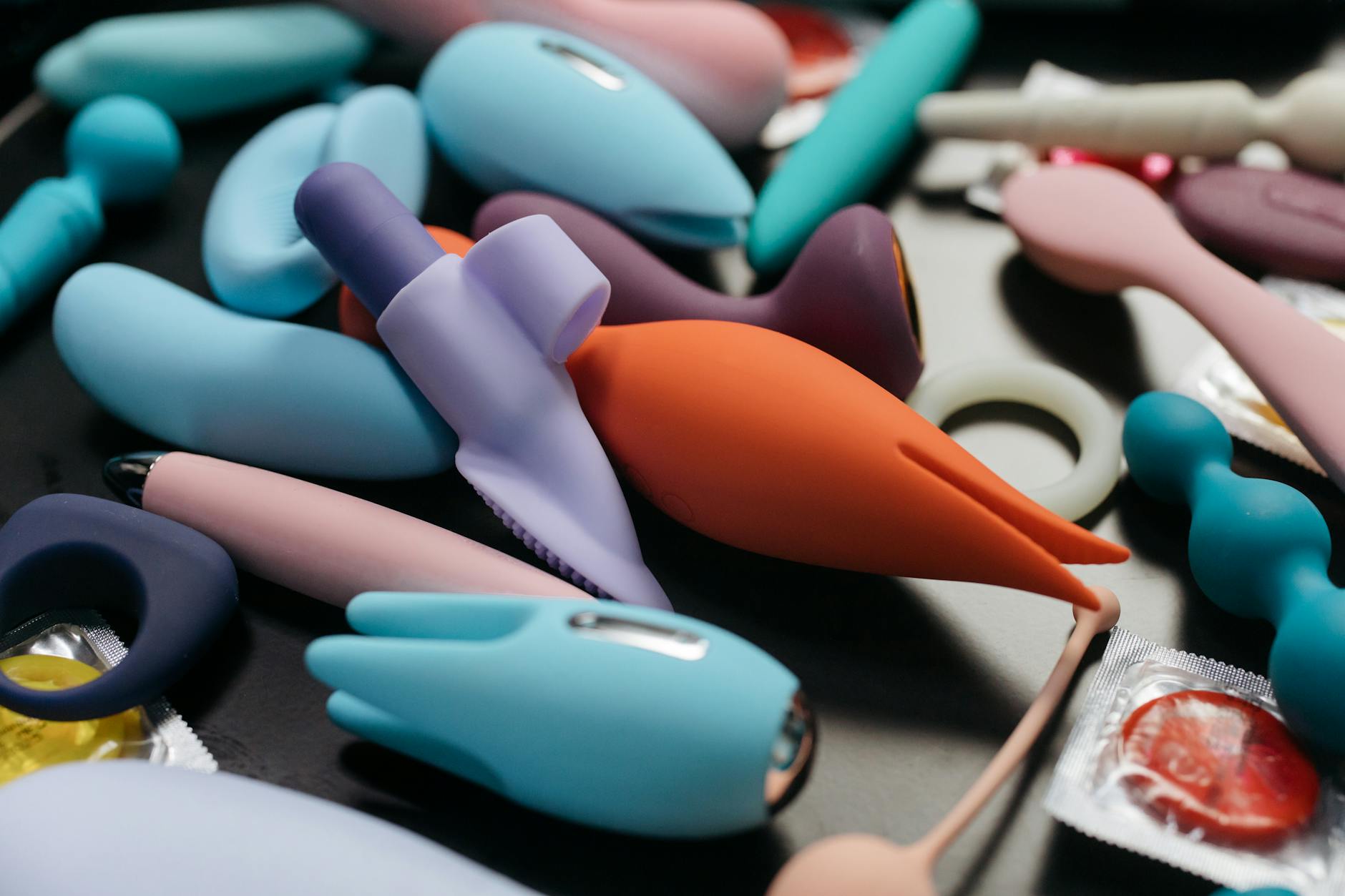
How to Introduce Lemon Vibrators to Your Partner Without Awkwardness
The conversation feels risky. It doesn't have to be. Here's exactly what to say, when to say it, and how to use clitoral vibrators together as a team, not a threat.
You want better orgasms. Or maybe you just want to feel more, differently. Or you're curious and you think it might be fun. Any of those reasons are valid. But there's a voice in your head that says: "What if my partner feels replaced? What if they think I'm not satisfied? What if this makes things weird?"
That voice is loud. And it's keeping you from something that could actually strengthen your connection, not weaken it. I've worked with hundreds of couples on this exact anxiety, and here's what I've learned: the conversation about lemon vibrators and clitoral vibrators isn't the dangerous part. The silence is. Because silence turns a neutral tool into a secret, and secrets corrode intimacy faster than anything else.
The fear underneath most partner resistance is misplaced. It usually goes something like: "If you need a vibrator, I'm not enough." That's not actually about the toy. It's about a deeper belief that pleasure should be automatic, that satisfaction should flow only from their effort, and that wanting more means wanting someone else.
All of that is false. But it feels true because nobody taught us the actual mechanics of pleasure.
Here's the science part made simple: clitoral orgasms require a specific kind of stimulation. For most people, the angle, pressure, and rhythm that a partner can provide by hand often doesn't match what the clitoris responds to best. That's not a reflection on your partner's skill or effort. It's just anatomy. A lemon vibrator isn't a replacement for your partner. It's a tool that does what fingers can't.
The Lem, for instance, uses suction and pulsing patterns that create a chain reaction in your nervous system. Your partner's hand can't replicate that. But here's the thing: your partner also doesn't have to. They can hold you, kiss you, be present while you use it. They can learn what patterns make you respond, and that knowledge deepens connection. They're not being replaced. They're being invited into something more interesting.
Timing matters. Don't bring this up during sex, right before sex, or right after sex. Don't bring it up when either of you is stressed, distracted, or defending. Choose a moment that's calm, private, and when you both have time to talk without rushing.
Start with curiosity, not demand. "I've been reading about something and I'm curious what you think" sounds different than "I want to buy a vibrator." The first invites conversation. The second sounds like an announcement.
Here's a framework that tends to work:
Step one: Make it about both of you. "I want to explore something with you that I think might feel really good for us both." Not for you. For us.
Step two: Name the tool, not the fear. "I've been reading about clitoral vibrators. I'm interested in trying one together." Direct and clear.
Step three: Invite their perspective. "What comes up for you when you hear that?" Then actually listen. Don't defend, don't explain away their feelings. Just listen.
Step four: Address the actual concern. If they say "Does that mean I'm not enough?" you say: "No. It means I want to show you something that feels incredible, and I want you there with me." If they say "That's weird," you can say: "I get why it might feel that way. But I've learned that pleasure is actually a skill we can develop together. This is part of that."
Some partners will. That's information, and it matters. A "no" might mean they need more time, more conversation, or a different explanation. It might also mean they have deeper beliefs about sex that aren't going to shift quickly. In that case, you have a real decision to make about what you're willing to accept in your intimate life.
But here's what I've seen more often: a "not right now" becomes a "maybe later" becomes a "okay, let's try it." Most resistance is just resistance to the unknown. Once the unknown becomes known, it often feels less threatening.
If your partner needs processing time, give it to them. Don't bring it up again every week. Mention it once, clearly, then let it sit. Sometimes people need weeks to adjust to an idea before they're ready to try it.
Assume you've had the conversation and they're willing to try. What happens next?
First: remove the goal of orgasm from the equation. You're not using a lemon vibrator because you need to achieve something. You're using it because you're curious. That distinction removes all the pressure. If an orgasm happens, great. If it doesn't, you still learned something.
Second: start slow and clothed. Let them see the toy first, hold it, feel how it works (on a pillow, not yet on skin). Demystify it. Then tell them exactly what it will feel like when you use it: "It's going to feel like a buzzing pressure. It's pretty strong. I might be quieter than usual because I'm focusing on the sensation."
Third: use it together in your foreplay. You're not replacing their touch. You're adding to it. They touch you, and you add the vibrator. Or you use the vibrator while they're inside you, or while you're inside each other. The point is: they're still part of the experience.
Fourth: talk about what you're feeling. "That's incredible" or "A little less pressure" or "More on the left side." This isn't clinical. It's intimate. You're teaching them how your body works, and they're learning.
Fifth: let them use it on you, if you want to. Some partners love this. It feels less like they've been replaced and more like they've been handed a new skill. Others prefer to watch, or to focus on other kinds of touch. There's no wrong choice.
This is common. You might love it and they might hate it. They might love it and you might realize you don't. Those are both valid.
If there's a mismatch, you're back to having a conversation, not a problem. "I loved that. I can tell you didn't. What didn't work for you?" And you listen. Maybe it felt too clinical. Maybe it triggered something about their body image. Maybe they just don't like vibrators and that's fine. You don't have to want the same things to respect each other's desires.
But here's what matters: you asked. You invited them. You tried. You communicated. That's the stuff that actually builds intimacy. The vibrator is just the vehicle.
If you're going to do this, pick something that feels good to both of you aesthetically. A lemon vibrator or lem design is less intimidating than something that looks clinical or explicitly pornographic. It feels playful, which lowers anxiety. It's also quieter than larger wand vibrators, which means less performance pressure if you're nervous.
Start on the lower power settings. This isn't about maximum intensity. It's about sensation you can actually feel and control. You want to be able to communicate about what's working, which is impossible if you're already overwhelmed.
Consider size too. Larger isn't better, especially for a first experience together. Smaller, focused toys like the Lem feel less invasive and give you more control. That matters psychologically, even if you're not conscious of it.
Once you've tried it, talk about it. Not exhaustively. Just "That felt good" or "I'm glad we tried that" or even "Let's not do that again." The point is to close the loop. You tried something together. You communicated. You're still okay. In fact, you might be better than okay.
Most couples find that the act of introducing lemon vibrators or clitoral vibrators together actually deepens trust. You've had a vulnerable conversation. You've tried something that felt risky. You've learned something new about each other's bodies. That's not a threat to a relationship. That's the foundation of one.
Absolutely. You don't need permission to explore your own body. But if you're using it secretly after your partner has said no to introducing toys, that's a different conversation. There's a difference between privacy and secrecy. Privacy is healthy. Secrecy erodes trust. If your partner said no and you're using it anyway without telling them, you're choosing the vibrator over the relationship. That might be the right choice for you, but know what you're doing.
Hello Nancy sells clitoral vibrators discreetly. They arrive in unmarked packaging. Nobody will know what's in the box but you. The embarrassment you feel is normal, but it often dissolves the moment you actually have the toy in your hands. You realize it's just a tool. It feels less shameful once it's real instead of theoretical.
You ask. "I notice you seem quiet about this. Are you really okay with it, or are you saying yes because you think I want you to?" People are actually pretty honest when you ask directly and make it safe to tell the truth. If they're faking, you want to know.
Yes, if you want to. Some people find that clitoral stimulation during penetration creates a sensation they love. Others find it too intense. Your partner might love that you're more responsive, or it might feel like pressure. Again: communication. You try it, you pay attention to your own body, you ask your partner what they're experiencing, and you adjust. There's no rule except what works for both of you.
That's okay. You don't have to like that. Some people love it. Others prefer to have solo control over their own stimulation. Neither is wrong. You can use it on yourself while they're involved in other ways. Or you can use it alone and they can use other kinds of touch. Mix and match.
Start smaller. Don't jump to vibrators. Start with "I want us to talk more openly about what we like in bed. No judgment, just honesty." That opens the door. Then, once you've had a few of those conversations, the vibrator conversation feels like a natural next step instead of coming out of nowhere.
Introducing lemon vibrators or any clitoral vibrator to your relationship isn't about the toy. It's about saying: "I trust you enough to be honest about what I want. I want to explore this with you, not away from you." That's the conversation. The vibrator is just the language you're using to have it.
Start here. Have the conversation. See what happens. Most couples who do find that the act of saying yes to something vulnerable together actually strengthens everything else. You stop performing. You start connecting. And that changes everything.
If you're nervous about how to navigate deeper intimacy conversations in your relationship, reach out. That's what I'm here for.