
Your nervous system didn't retire at 40
Let's be real. Something shifts around 40. Arousal takes longer. Orgasms feel different. Sometimes quieter, sometimes more complex. The instinct is to think the party's winding down. It's not. Your body just changed the rules of the game.
Physically, testosterone and estrogen begin their long, gradual decline after 40. Blood flow to the genitals becomes slower. The clitoris might feel less responsive to light touch. Recovery time between orgasms gets longer. These are facts, not failures. But they're facts most people never talk about, which is why they land like a betrayal.
Here's what nobody tells you: the clitoral nervous system doesn't downgrade. It reorganizes. You still have all the neural pathways for pleasure. Your brain is still capable of intense sensation. What changes is the pathway there. And once you understand that pathway, lemon vibrators like the Lem become less a workaround and more a tuned instrument for exactly how your body works now.
Why sensation feels different (and what to do about it)
Three things happen in your 40s that affect arousal response.
Vasocongestion takes longer. That's the fancy term for blood rushing to your genitals. At 25, it might take 30 seconds of focused attention. At 45, it might take 10-15 minutes. This isn't a problem. It's just timing. Budget for a longer warm-up and you're already ahead of the game.
Clitoral tissue sensitivity shifts. The clitoris has 8,000 nerve endings. Those nerves don't disappear at 40. But the tissue around them gets less plump. Lighter touch might feel less distinct. Direct, concentrated stimulation becomes more reliable. This is precisely what lemon clitoral vibrators excel at. The suction and pulse pattern on a device like the Lem works by stimulating nerve clusters directly, without relying on tissue thickness or light responsiveness.
Your refractory period extends. The time between one orgasm and the next gets longer. At 25, you might go again in 10 minutes. At 45, it might be 30 or 45 minutes. Some people find this annoying. Many find it actually allows for deeper, more integrated pleasure. One orgasm per session becomes less about repetition and more about quality and presence.
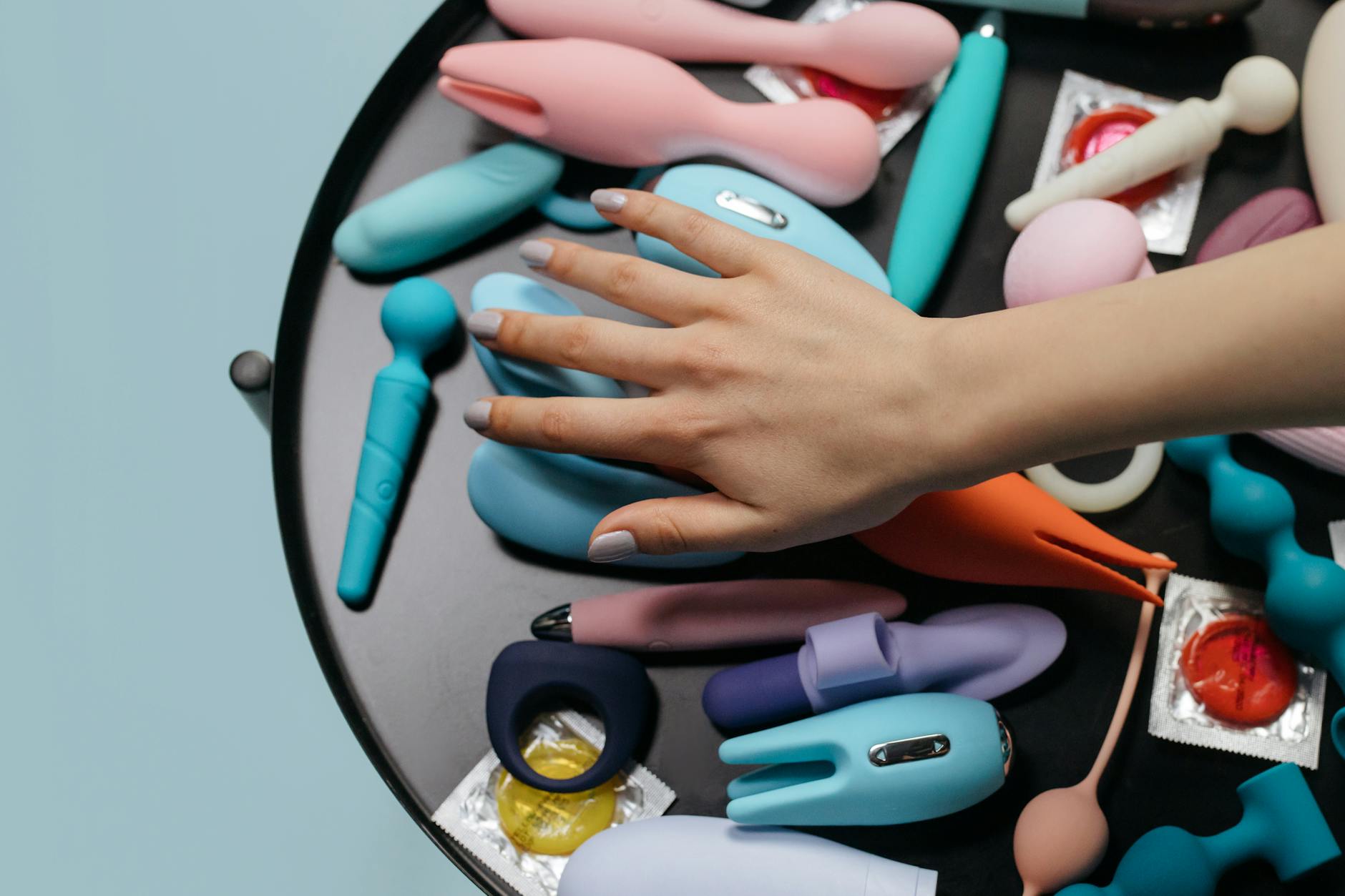
Photo by cottonbro studio on Pexels
What changes, and what absolutely doesn't
I want to be clear about what stays the same, because this is where a lot of people get discouraged unnecessarily.
Your clitoris still has all the nerve endings it had at 35. The capacity for orgasm doesn't diminish. Your brain's reward response to sexual pleasure doesn't decline. Desire doesn't automatically tank (and if it does, that's usually a separate issue worth exploring with a doctor or therapist, not just an inevitable part of aging). Many of my clients report the most satisfying, intense orgasms of their lives after 40. This isn't inspirational talk. It's clinical reality.
What does change is primarily mechanical and chemical. Blood delivery. Hormone levels. Tissue elasticity. None of these things affect your capacity for pleasure. They affect the efficiency of the pathway to pleasure.
Think of it like this. At 25, your nervous system is a highway with multiple entry ramps and fast acceleration. At 45, you might have fewer ramps, but the highway itself is still there. You just need a clearer route.
Why lemon vibrators work differently at this stage
Most vibrators rely on one of three mechanisms: simple vibration, pulsing patterns, or suction. Here's why suction-based devices like Hallonancys Lemon's clitoral vibrators become such a game-changer after 40.
Vibration alone requires fairly responsive tissue to register as distinct sensation. If your clitoris feels a bit less reactive to light stimulation, pure vibration might feel like background noise. Pulsing patterns help, but they still depend on your tissues having enough plumpness to really feel the movement. Suction works differently. It creates a gentle vacuum that draws tissue into the mouth of the toy. This stimulates nerve clusters directly and doesn't depend on tissue responsiveness. For people experiencing the exact changes that come after 40, this is often the most efficient path to orgasm.
The pattern matters too. A fast, intense pattern that worked at 25 might feel overwhelming or even uncomfortable now. Slower, deeper patterns with sustained suction allow arousal to build gradually and predictably. You're not fighting against your nervous system. You're moving with it.
The practical setup that actually works
Here's what I recommend to clients in their 40s and beyond who are using lemon sexual toys for the first time or returning to solo play.
Give yourself 20-30 minutes. This is non-negotiable. Rushing this stage, even mentally, activates stress response and kills arousal. The longer warm-up isn't a bug. It's actually an opportunity to drop into your body without performance pressure.
Start with pattern 1 or 2 on the Lem. Not because you're damaged, but because slow accumulation often works better than explosive intensity. You can always increase intensity. You can't uncrank something that's too much.
Use lubrication, even if you don't think you need it. Tissue responsiveness after 40 means less natural lubrication sometimes, but even beyond that, lubrication helps the suction seal work better. Water-based lube, always. It's not about damage. It's about optimization.
Position matters. At 25, you might have been fine perched uncomfortably on the edge of a bed. At 45, supporting your back properly, having your hips elevated slightly, and being genuinely comfortable actually matters. Tension kills arousal faster than almost anything else. Make comfort your first priority.
Stop thinking about the end. The most common sabotage I see after 40 is someone white-knuckling their way toward an orgasm instead of just experiencing the buildup. The pathway might be slower, but it's usually more reliable if you're actually present for it. Less goal, more presence.
When emotional stuff is tangled in the physical stuff
Here's where relationships get complicated. Physical changes after 40 are real. But they're often not the main thing slowing things down.
By 40, most people have accumulated some resentment. Some sexual shut-down from years of not being heard. Some grief. Some tangles with a partner about desire or direction. And sometimes, solo pleasure is actually easier to access when you're not carrying all that into the experience.
If you're returning to solo play after a long gap, lemon clitoral vibrators can be a surprisingly gentle way to reclaim some of that pleasure without the emotional weight of partnered sex. There's no performance, no monitoring a partner's response, no old arguments in the room. Just your body, your breath, and a tool that meets you where you are right now.
That said, if you're in a relationship and physical changes are creating friction, talking about it directly is crucial. "My body is responding differently" is not the same conversation as "I'm not attracted to you anymore." Conflating them turns both conversations into dead ends.

Photo by cottonbro studio on Pexels
Medication and arousal after 40
Something worth naming: by 40, many people are on medications that affect arousal. SSRIs, blood pressure meds, thyroid medication. Sometimes the physical changes after 40 are actually medication side effects, not aging. If arousal has dramatically tanked or sensitivity has dropped sharply, talking to your doctor about timing, dosage, or alternatives is worth doing. Sometimes a simple shift helps.
If you're on an SSRI or similar medication and sensitivity feels muted, this is how to use lemon vibrators when antidepressants reduce sensitivity, which is a common friction point with its own solutions.
The permission piece, which matters more than technique
I work with a lot of people after 40 who spent their 20s and 30s calibrating their sexuality around someone else's needs. Around performance. Around fitting into a particular image. At 40, something shifts internally, and suddenly you're allowed to explore what actually turns you on, without any of that external measurement.
This is profound. And it's also why solo play with a lemon clitoral vibrator becomes less about filling time and more about reclaiming agency. You're not doing this for anyone. You're not checking a box. You're just exploring what your body can feel, for you.
That permission is worth more than any technique tip I could give you.
Troubleshooting the most common friction points
"It takes forever to get there." That's normal now, and also, it's often more reliable. Longer buildup usually means more durable arousal. Try thinking of the time not as a problem but as permission to drop in deeper.
"Sensation feels muted." Start with the Lem on a lower pattern and give your nervous system time to recognize the sensation. Sometimes a full minute at pattern 1 shifts how the next minute feels. Rushing through patterns can actually dull sensation.
"I feel pressure to hurry." This is a mindset shift. You're not on a schedule. If it takes 30 minutes, it takes 30 minutes. Your pleasure isn't less valid for taking longer to arrive.
"My mind keeps wandering." Totally normal. Gently redirect. Sometimes anchoring on your breath or the sensation itself, rather than chasing the finish line, helps.
FAQ
How often should I be using lemon vibrators after 40?
There's no "should." Some people use them a few times a week. Some a few times a month. The goal isn't frequency. It's presence and pleasure when you do choose to engage. What matters is that it feels good and you're doing it for you, not because you think you're supposed to.
Do lemon clitoral vibrators become less effective over time?
Not really. What changes is your familiarity with how your body responds to them. Novelty wears off, which is normal. If something stops working, usually it's a mindset shift or a change in arousal context, not the toy itself. Sometimes switching patterns helps. Sometimes you just need a break and then come back to it.
Is it normal that orgasms feel less intense after 40?
Different, not necessarily less. Some people report that orgasms feel deeper or more localized rather than full-body explosive. Some report quieter pleasure that builds over time. The intensity metric is weird because it assumes explosion is always the goal. Pleasure comes in many textures. The one you're having now might actually be richer.
Should I be worried if I need to use lemon vibrators to reach orgasm after 40?
Not at all. Toys don't create a dependency. They're tools that work with your nervous system as it actually is right now. Using a toy because it works with your body, not against it, is smart. It's not a sign of failure or damage.
Can I use lemon vibrators if I'm taking hormonal medication?
Usually, yes. If you're on hormone therapy, birth control, or other medications, they might affect arousal, but they don't make vibrators unsafe. If sensation feels really off, it's worth checking with your doctor about whether your medication timing or dosage is right for you. But the vibrator itself is fine.
What if my partner feels threatened by me using a lemon vibrator?
That's a conversation, not a reason to stop. Solo pleasure and partnered pleasure are different things serving different needs. Sometimes it helps to separate them in the conversation. "I'm using this for me" is complete. You don't have to defend it beyond that, though being willing to talk about what it means to you can help a partner understand it's not about replacing them.
The bigger picture
After 40, your body isn't betraying you. It's just operating on different chemistry and physics. That's not a tragedy. That's information. And once you have the information, once you understand how your nervous system actually works at this stage, you can work with it instead of against it.
Lemon clitoral vibrators like the Lem are particularly good at this stage because they're designed around suction and pattern, not just intensity. They meet your body where it is. That's not a compromise. That's alignment.
Your pleasure isn't behind you. It's actually, for many people, just getting interesting. If you're curious about deepening solo practice or want to explore what your body can feel now, you're exactly where you're supposed to be. Get in touch if you want to talk through your specific situation.
References
- American College of Obstetricians and Gynecologists (ACOG). Sexuality and sexual health in menopause and beyond. 2023.
- Kinsey Institute. Aging and sexual response. Contemporary research on sexual response across the lifespan.
- Masters and Johnson. Human sexual response cycle and aging. Clinical sexual medicine research, 2020.