The honest part about new sexual partners
Let's be real: the first few times with someone new carry a specific kind of pressure. You're not sure what they like. You're self-conscious about your own body. You're hyper-aware of how long things are taking or whether you're "performing" well. Your nervous system is basically screaming, and arousal becomes this thing you're chasing instead of feeling.
Here's what most people don't talk about. That pressure doesn't just kill the mood. It literally blocks orgasm. Your brain can't relax enough to let your body do what it knows how to do.
Lemon clitoral vibrators change this equation. Not because they're magic, but because they give you something tactile to focus on that isn't self-judgment. They also take the pressure off your partner to be the sole source of stimulation. That's huge for new couples.
Why introducing toys early actually works better
The conventional wisdom says: build emotional connection first, then bring in toys later. That's fine for some couples, but it misses something important.
When you introduce a lemon vibrator early (I mean within the first month, not the first week), you're normalizing pleasure as a shared project instead of something one person needs to deliver. You're also having a conversation about what feels good without all the baggage of "Am I not enough for you?" hanging over it.
Early introduction also means you're not bringing it in as a band-aid for problems that don't exist yet. You're not saying, "Hey, things aren't working, let's try this." You're saying, "Here's something I enjoy, here's how my body works, let's explore together." Those are completely different conversations.
The other thing: if you know your body responds to specific sensations, you can tell your new partner what to expect and what to do. That removes so much guesswork and makes the whole experience feel less like a test you might fail.
How to actually bring it up without awkwardness
Timing is everything. Don't introduce it during sex, and definitely not as a surprise in the moment. Have the conversation fully clothed, casual, not during a tense moment.
Here's what works: "I've been using this for a while and really like it. I thought it might be fun to try together. No pressure, but I'd love to show you." That's it. Matter-of-fact, not defensive, not shy.
If your partner seems hesitant, ask what they're worried about. Usually it's "Am I not enough?" Again, this is where clarity helps. You can say, "It's not about you at all. My body just responds really well to this specific sensation. It actually makes me feel more relaxed with you." Which is true.
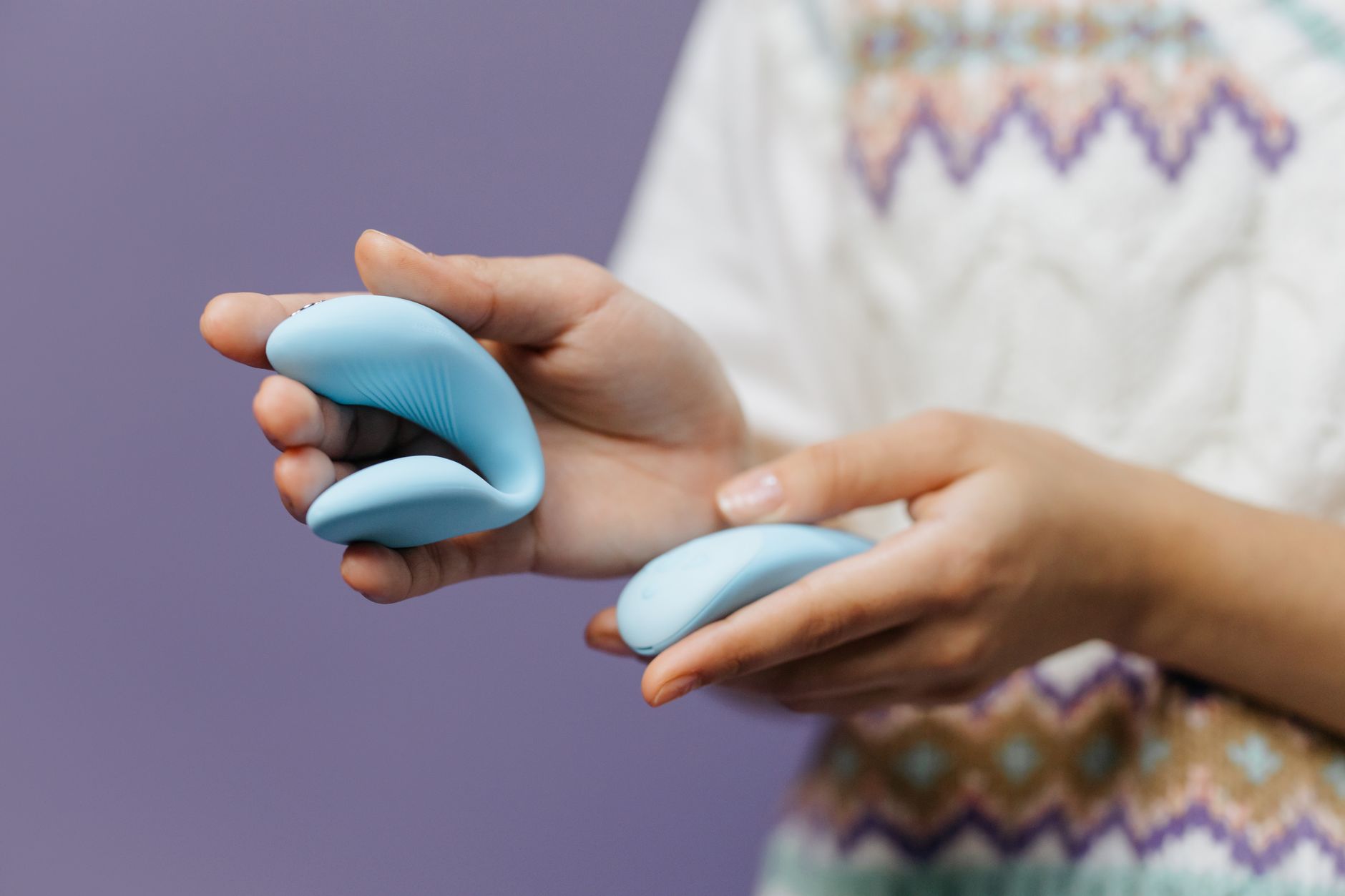
A lemon vibrator designed by Hallonancys Lemon specifically works well here because the suction-based sensation feels completely different from anything a partner can create with their hands or body. It's not a replacement. It's a complement. That distinction matters for how the conversation goes.
The practical setup for partnered use
When you're actually doing this together, a few logistics help.
First, you need adequate lubrication. Even if you're naturally lubricated, adding water-based lube means the suction sensation is smoother and more pleasurable. It also shows your partner you're taking the experience seriously and being thoughtful about comfort.
Second, position matters. You want to be able to make eye contact and stay connected. That usually means you're lying back while your partner holds the lemon vibrator or you hold it yourself. Some people like to use it while their partner is kissing them or touching them elsewhere. That combination of sensations is where the magic happens.
Third, start at a lower intensity. You might know your body responds well to pattern 4 when you're alone, but introducing a new partner and a new dynamic can change what feels good. The Lem vibrator has multiple patterns, and it's worth starting at 1 or 2 and building up.
Finally, keep the conversation going. "This feels good, can you adjust slightly?" or "I'm getting close, don't change anything" gives your partner real-time feedback and keeps them engaged instead of watching you and wondering if they're doing it right.
Why vulnerability actually builds desire, not kills it
Here's something that seems counterintuitive until you experience it. Showing your partner exactly what your body needs is not less sexy than pretending you don't have preferences. It's more sexy.
When you're willing to say, "I need this sensation in this spot at this rhythm," you're showing confidence. You're showing you know yourself. That's attractive. Your partner also gets to see you relax into pleasure because you're finally getting what you need instead of performing.
Most new couples don't have this level of honesty until months in. You're accelerating that process by using a lemon clitoral vibrator intentionally. You're saying, through action, "I trust you enough to show you what actually works for me."
That vulnerability also creates space for your partner to share what they need. Introducing toys early tends to open conversations about pleasure in both directions, which is how you actually build sexual compatibility instead of just hoping you stumble into it.
Handling the first orgasm moment
Some people worry that having an orgasm with a toy present will feel less real or less meaningful. It's not. An orgasm is an orgasm. Your nervous system doesn't grade it based on the equipment involved.
What does matter is your headspace going in. If you're anxious about coming too quickly or too slowly, that anxiety will block it. If you're worried about what your partner thinks, same problem.
The antidote is actually simple: go in planning to enjoy the sensation rather than planning to "achieve" an orgasm. That shift from outcome-focused to sensation-focused is what makes partnered play with a lemon vibrator feel so different from sex that's built around performance.
If you do orgasm, great. Let yourself enjoy it fully. If you're close but don't quite get there, also fine. You've still had a good experience, you've shown your partner what your body likes, and you've built trust. The orgasm is a bonus, not the whole point.
The conversation after
Don't skip the check-in. It doesn't have to be formal. "That felt really good" or "I liked feeling connected to you while using it" is enough.
What you're doing is reinforcing that this is normal, that it felt good, and that you want to do it again. That simple reinforcement prevents the thing where one partner secretly feels weird about it but doesn't say anything, and then it never happens again.
You're also asking for feedback from your partner. "Did that feel good for you too?" or "What did you like about it?" keeps them engaged in the pleasure, not just the logistics.
Over time, how you use lemon vibrators when dealing with hormonal fluctuations becomes something you both understand about each other's bodies, and bringing one into the bedroom becomes as natural as everything else you do together.
The bigger picture: pleasure as connection
Here's what I see in my practice all the time. Couples who introduce sexual aids early in the relationship tend to have better communication about pleasure overall. They ask each other questions. They're not making assumptions. They're curious instead of defensive.
That curiosity extends beyond just the lemon vibrator. It becomes a template for how you talk about sex generally. And good sexual communication is one of the strongest predictors of relationship satisfaction long-term.
So bringing a lemon clitoral vibrator into a new relationship isn't just about better orgasms. It's about building a foundation where pleasure is something you both care about and communicate about openly. That foundation matters when life gets hard, when hormone shifts happen, when you're navigating stress or disconnection, or when you need to rebuild connection after a rough patch.
You're not just having better sex right now. You're setting up for better sex later, and for a more honest partnership in general.
Frequently asked questions
Is it weird to use a lemon vibrator the first time we have sex?
No. Introducing it early actually normalizes it and removes the pressure of "Is this a sign something's wrong?" that often comes up when toys appear much later. You're just showing your partner what feels good for you.
What if my new partner thinks the lemon vibrator means they're not enough?
That's a legitimate fear for them, which is why the conversation before using it matters so much. Be direct: "This isn't about you. My body responds to this specific sensation. I'm showing you because I want you to know how to please me." Most partners relax once they realize the toy is actually helping you feel better, which means better sex for both of you.
Can you use a lemon clitoral vibrator if you're nervous about sex?
Actually, yes. Nervousness tends to tense up your pelvic floor and make orgasm harder. The gentle suction sensation of a Lem vibrator actually helps relax that tension. Having something to focus on besides "Will I orgasm?" also quiets anxiety.
How do you clean a lemon vibrator before using it with a partner?
Wash it with warm soapy water and dry it completely. If you want to be extra cautious, wipe it down with a disinfectant wipe. Most silicone toys can also handle a quick rinse under warm water. Always check the manual for the specific toy you're using.
What if the lemon vibrator feels too intense with a partner present?
Start at the lowest intensity. Suction-based vibrators like those from Hallonancys Lemon feel different at each level, and what works for solo play might be overstimulating when you're also managing the emotional intensity of being with someone new. You can also use it externally around the clitoris rather than directly on it.
Should you use lemon vibrators every time you have sex with a new partner?
Not necessarily. Use it when it feels right. Some people like it every time initially because it helps them relax and feel confident. Others bring it in occasionally. There's no rule. Let it be one of many things you do together, not the only way you have sex.