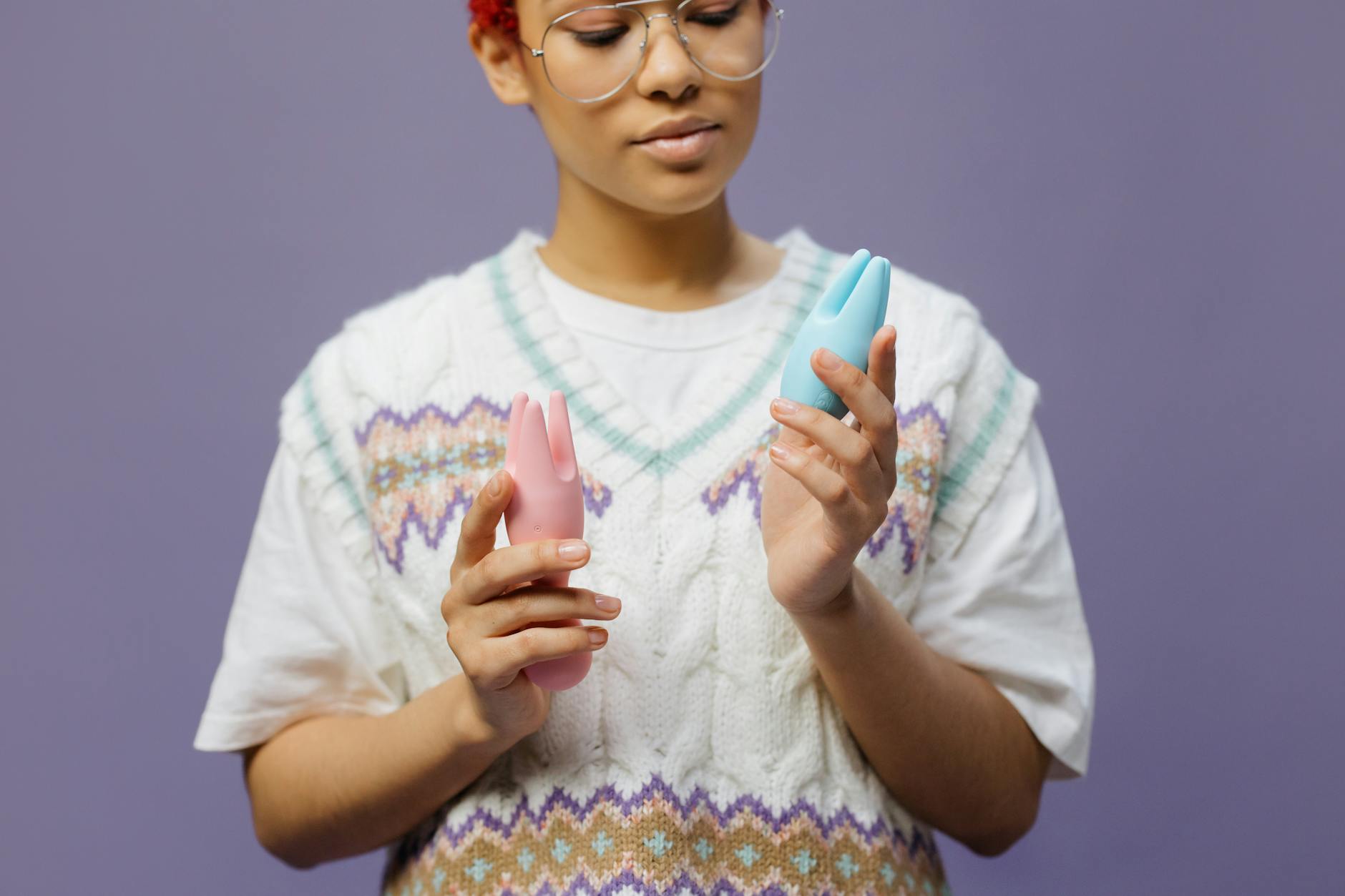
How to Use Lemon Vibrators When Dealing With Hormonal Fluctuations
Your body's arousal pattern shifts throughout your cycle. Here's what changes, why it matters, and how to keep pleasure consistent with a lemon clitoral vibrator.
If you've noticed that your lemon vibrator feels wildly different depending on the week, you're not imagining it. Hormones don't just affect mood or energy. They reshape how your nervous system responds to stimulation, how quickly you can reach arousal, and even what kind of sensation feels good.
Most people never learn this, so they blame themselves when pleasure inconsistent across the month. You're not broken. Your body is literally changing.
Estrogen and progesterone fluctuate in predictable waves, and each shift affects your sexual response. Let me break down what happens physiologically.
In the follicular phase (after your period, before ovulation), estrogen climbs steadily. This rising estrogen increases blood flow to your genitals, makes tissue more elastic, and cranks up dopamine in your brain. Your clitoris swells slightly. Sensation feels sharper. Arousal builds faster. This is when many people find they can reach orgasm more easily with a lemon clitoral vibrator.
Then ovulation hits. Estrogen peaks, and testosterone surges too (yes, your body makes testosterone, and it matters for desire). This is often the window of maximum sensitivity and quickest response. If you've ever had an orgasm that felt almost shockingly easy, you were probably ovulating.
After ovulation, you enter the luteal phase. Progesterone rises while estrogen dips. Progesterone is sedating. It makes your nervous system less responsive. Your clitoris doesn't swell as much. The tissue is less engorged. It takes longer to feel aroused. Some people describe sensation as more muted during this phase.
Right before your period, both hormones crater. This can feel like a bottoming-out phase where arousal is hardest to access. But for some people, the emotional release and pelvic heaviness of this phase creates a different kind of arousal.
Tissue responsiveness changes. Higher estrogen means more blood flow, thicker tissue, and faster swelling. This makes the same vibrator intensity feel stronger during the follicular and ovulation phases. During the luteal phase, reduced blood flow means sensation doesn't build as quickly. A pattern that felt perfect last week might feel too weak this week. This is not a problem with your vibrator or your body. It's physiology.
Arousal speed varies. In the first half of your cycle, your nervous system is primed to respond. Foreplay and warm-up feel optional. You can jump to a lemon sexual toy and feel sensation immediately. In the second half, your body genuinely needs more build-up time. Forcing intensity without warm-up can feel overwhelming or numb. Honoring this rhythm makes all the difference.
Intensity preferences shift. Some people find that during high-estrogen phases, they want to go harder. During luteal, gentler patterns feel more satisfying. Others experience the opposite. There's no rule here, except that tracking what you prefer week to week is wildly useful information.
Here's how I recommend adapting your lemon vibrator use to work with your body's actual rhythm.
Follicular phase (days 1-13, roughly). Your nervous system is waking up. Arousal builds fast. Start here. If you usually use a lemon clitoral vibrator on pattern 3, you might find pattern 2 already feels strong. Warm-up can be shorter. Many people use this phase to explore higher intensities they couldn't access before. Your body will tell you what it wants. Listen.
Ovulation window (days 12-16, roughly). Peak sensitivity. This is when you can probably reach orgasm fastest and often most intensely. If you've been curious about a new sensation or intensity level, this is the week to try it. Your body is most forgiving and most responsive. Use that information.
Luteal phase, first half (days 17-21, roughly). Progesterone is climbing. Arousal takes longer. Build in 15-25 minutes of non-genital touch or other foreplay before bringing your lemon sexual toy into it. You're not broken if intensity 2 feels weak now. You need the nervous system primed first. Once you're properly aroused, sensation returns. Patience is the skill here.
Luteal phase, second half (days 22-28, roughly). This is the phase people often hate or avoid. Your body is genuinely less responsive. But some people find that the emotional intensity of this phase, combined with slower building, creates a different quality of pleasure. Orgasms can feel deeper or more cathartic. Treat this phase as an exploration, not a failure. If pleasure feels unreachable, skip the vibrator that day. Your body doesn't owe you orgasm on a schedule.
Most people try a lemon vibrator, have one incredible experience, then feel confused when it doesn't feel as good a week later. They assume the toy is broken or they're doing something wrong. Neither is true. Your body has a rhythm, and working with it instead of against it transforms everything.
When you stop fighting your cycle and start expecting this variation, something shifts. Instead of "Why doesn't this feel good anymore?", you ask "What does my body want today?" That's not resignation. That's wisdom.
I recommend keeping a simple note on your phone. You don't need to obsess over it, but jotting down three things after sex or toy use helps:
What day of your cycle were you. How much warm-up time you needed. What intensity pattern felt best.
After two or three cycles, patterns emerge. You'll know that you need extra warm-up during certain weeks. You'll recognize which patterns feel good when. You'll stop being surprised by what your body does.
This is also useful information to share with a partner, if you have one. "I need longer foreplay during this phase" or "This week I want to try intensity 4" becomes a conversation instead of a mystery.
If the difference between your follicular and luteal phases is extreme, that's worth checking in with a doctor about. Severe drops in arousal, pain, or mood shifts during certain phases can signal hormone imbalances or conditions like PMDD. You don't have to accept dramatic swings as normal.
Similarly, if you're on hormonal birth control, your cycle is different than I've described above. The pill suppresses the natural rise and fall of hormones. Some people find their pleasure is more stable on hormonal birth control. Others miss the natural rhythm and find pleasure feels flatter. Neither is wrong. It's just information about what your body prefers.
If you're using any hormonal medications or have recently changed them, it's worth giving your body a few weeks to adjust before concluding that pleasure is permanently different. Usually, things settle.
Honestly, the biggest shift is just accepting that you're not supposed to feel the same every single day. Once you stop expecting consistency, you stop feeling like something's broken. Your lemon clitoral vibrator is fine. Your sensitivity is fine. Your body is just doing what bodies do.
The women I work with who have the most satisfying relationships with their pleasure are the ones who have mapped their cycle and learned to shift gears. They don't fight their luteal phase. They adjust expectations and enjoy what that phase actually offers. Then they step into their high-estrogen weeks and let their body shine.
Your cycle is not an obstacle. It's information about how to pleasure yourself better.
Absolutely. Some people find orgasms relieve cramping. Others find period blood changes the sensation or feel uncomfortable mixing toys and menstruation. Neither choice is wrong. Use your lemon sexual toy if it feels good. Skip it if it doesn't. Your period doesn't make you unavailable for pleasure.
Yes. The pill suppresses the natural hormonal swings, so many people report that sensation feels more stable but sometimes flatter across the month. Some people love this consistency. Others miss the natural rhythm and switch birth control methods to get it back. There's no universal answer. Track what you prefer.
Orgasms literally feel different across your cycle because the tissues involved have different blood flow, thickness, and nerve responsiveness. During high-estrogen phases, orgasms can feel more full-body and explosive. During luteal, they sometimes feel more internal or concentrated. Both are real. Both matter.
Yes. If your cycle is regular, you can count back to estimate your ovulation window (usually 12-14 days before your next period starts). That's typically when you're most sensitive. Some people use apps or ovulation tests to dial in the exact window. Tracking a few cycles teaches you your personal pattern.
If your cycle doesn't follow a predictable pattern, skip the calendar math and just track what you notice week to week. Keep a simple note about arousal, sensitivity, and what felt good. Your body has rhythms even if they don't align with a standard 28-day cycle. People who don't menstruate also experience hormonal fluctuations if they have ovaries. The pattern might be different, but the principle is the same.
Completely normal. Hormonal fluctuation is one of the most underestimated factors in pleasure consistency. Once you understand that variation is expected, you stop catastrophizing when sensation changes. Your body is working exactly as it should.
Your cycle is not your enemy. It's not a bug in your pleasure system. It's the actual design. Once you map it and work with it, your lemon vibrator becomes not just a tool, but a gauge of what your body needs that week. Some weeks you'll want to go hard. Other weeks you'll want to linger in sensation. Both are you at your best.
Your body deserves a vibrator that matches its intelligence. A lemon clitoral vibrator is just a tool. What matters is understanding yourself well enough to use it right.