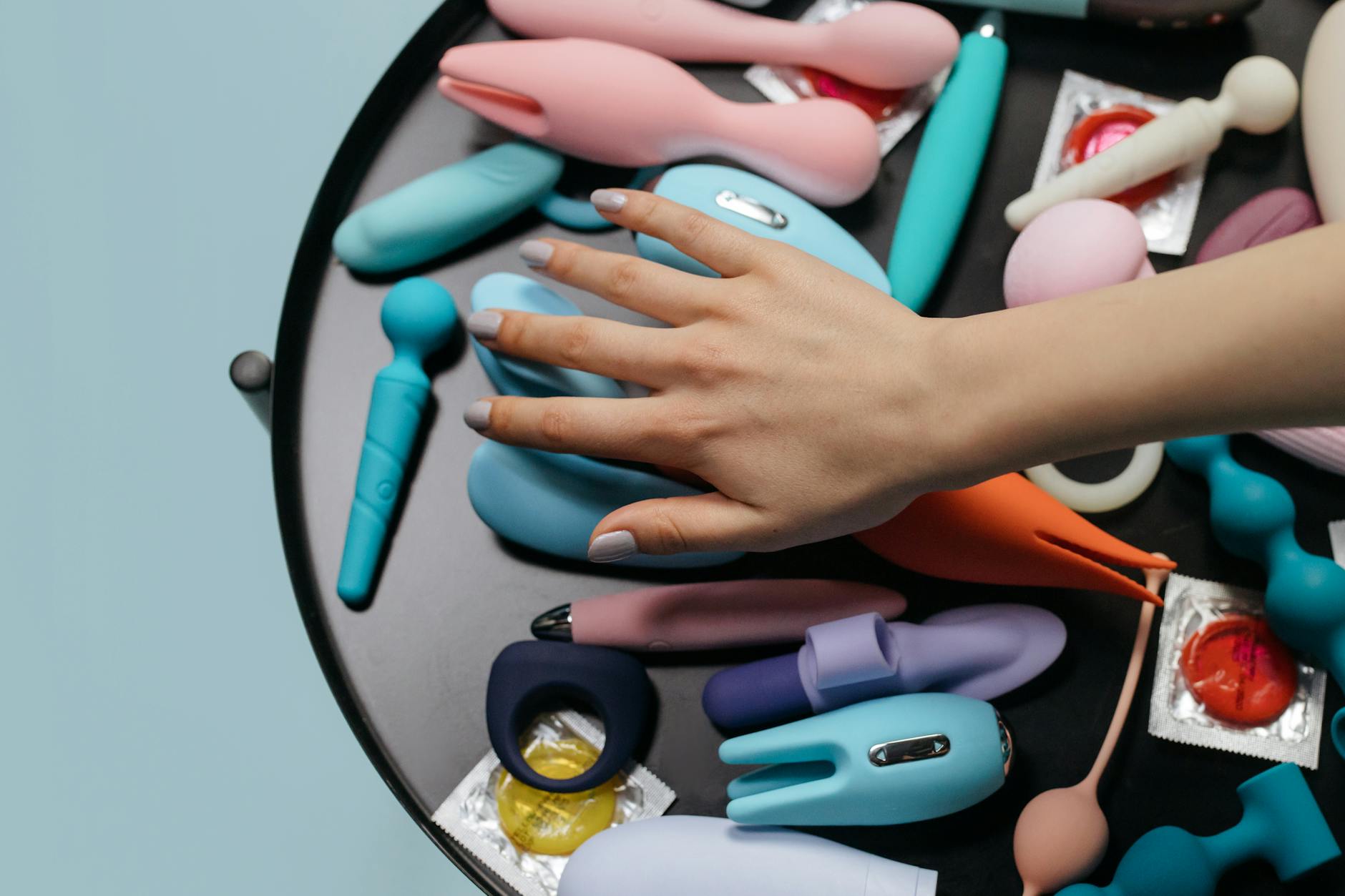
Here's what I hear from partners in therapy: "I'm worried she wants it because I'm not doing enough." And here's what I hear from the other side: "I want to explore this, but I'm terrified he'll think I'm saying he's bad in bed."
That gap. That fear living in both people at the same time. That's the real problem. And it's entirely fixable.
Partners often interpret a vibrator as criticism. It feels like "you're not enough." But that's not what a lemon vibrator actually is. It's specificity. Your clitoris responds to a particular kind of stimulation — rapid, focused, consistent suction that no hand or mouth can perfectly replicate. That's physics, not a referendum on your partner's effort.
The insecurity usually comes from somewhere deeper: a partner might have grown up hearing that wanting pleasure was selfish, or that needing anything from a partner meant the relationship was failing. For some men, there's a layer of cultural conditioning that links their sexual prowess to their worth as a partner. A vibrator threatens that story.
Here's the reframing that actually works: this isn't about what he can't do. It's about what you both get to explore together.
Don't ambush this. Don't wait until you're in bed. Pick a calm moment, clothed, not at night when vulnerability feels riskier.
Start with why you want this for yourself, not what's missing. "I've been curious about trying a clitoral vibrator. I think it could help me understand my own body better, and I want you to be part of that exploration with me."
Then listen. Let him ask questions. Don't defend or over-explain. If he says "Am I not enough?" the answer is not "Of course you are." That's a lie and you both know it. The answer is: "This isn't about enough. It's about something specific that turns me on. That has nothing to do with how I feel about you."
That's true. Orgasm isn't a zero-sum game where pleasure from a toy subtracts from pleasure with your partner. It's additive. It's expansion.
Frame 1: Shared exploration. "I want to use this with you, not instead of you. I want you to watch, to touch me while I use it, to see what makes me respond. I want that intimacy."
Frame 2: Accelerated pleasure. "This could get me to orgasm faster, which means more energy for us, more confidence in my body, better sex overall. You benefit too."
Frame 3: Specificity, not deficiency. "My clitoris responds to really fast, consistent vibration. That's not a critique of you. It's just information about my body. Like how you have a specific grip pressure that feels best. It's data, not judgment."
Pick the frame that fits your relationship. Use it once, clearly. Don't repeat it like a mantra.
Timing is everything. Don't pull out the toy when he's already vulnerable or tired. Use it when you're both energized, when there's playfulness in the air.
Start without it. Have normal foreplay. Build arousal the way you usually do. Then introduce it: "I want to try this now. Will you stay with me?"
Invite participation. Let him hold it. Let him apply it while you guide his hand. Let him watch your face, your body responding. That's where the magic happens. The vulnerability of being observed while using a tool that makes you feel incredible is profound. He gets to see you in real-time pleasure, unfiltered.
Don't expect him to be totally comfortable the first time. He might feel awkward. He might need to look away. That's okay. Reassure him: "I like having you here. This is us, together."
Don't disappear into post-sex haze. Check in while you're still connected. "That felt really good. I loved that you were here with me." Not: "That was amazing, I'm obsessed." That triggers the insecurity again.
If he seemed withdrawn or uncomfortable, address it gently: "I noticed you seemed a bit quiet. How are you actually feeling about that?"
Listen without defending your choice. If he says "I felt a bit left out," that's information. It might mean he wants more participation next time. It might mean he needs to talk to someone about where that feeling comes from. Both are valid.
Don't use the vibrator as a substitute for partnered touch. Don't spend 15 minutes with the toy and five minutes with him. The balance matters, especially early on. Most partners relax about vibrators once they see it's genuinely integrated into the sexual experience, not replacing them.
Don't get defensive if he has questions or concerns. "This is my body" is technically true, but in a relationship, bodies are partly shared territory. His feelings matter. Both things can be true.
Don't expect him to instantly love the idea. This might take weeks or months of conversation before he's ready. That's not failure. That's the speed of trust.
Introducing a lemon clitoral vibrator with an insecure partner is actually an intimacy accelerator if you do it right. You're teaching him that your pleasure isn't a threat. You're modeling vulnerability. You're literally showing him that you can ask for what you want and still love him, still choose him.
That's the real work. The toy is just the vehicle.
And here's what I see in couples who navigate this well: the insecurity doesn't disappear, but it transforms. He stops seeing vibrators as competition and starts seeing them as permission. Permission for both of you to be fully alive in your sexuality. Permission to keep exploring, together, at any age or stage of the relationship.
If he continues to resist or shame you for wanting this, that's information too. That's worth examining separately, maybe with a therapist. But most partners, given clarity and patience and the chance to participate, move through the insecurity. They see you come. They feel you relax. They realize they get to benefit from your pleasure, not compete with it.
How do I know if my partner is genuinely okay with me using a lemon vibrator, or just saying yes to make me happy?
Watch what he does, not just what he says. Does he ask questions? Does he want to be involved? Does he seem curious or just compliant? Early on, curiosity is the tell. If he's genuinely uncomfortable but hiding it, that will leak out in the bedroom—withdrawal, less affection after, comments that feel like jabs. If you sense that, pause and have another conversation. "I want to make sure you're actually okay with this, not just saying yes because I asked." Give him permission to be honest.
What if my partner says no? Should I use it anyway?
No. Not yet, anyway. A "no" is information. It might mean "I'm not ready," "I feel threatened," "I don't understand it," or "I need time." Each one calls for a different response. Have a real conversation about what the "no" means. Is it a hard boundary or a fear? If it's fear, can you address the fear? If it's a boundary, you get to decide what to do with that. But sneaking around undermines trust, which is worse than not having the vibrator.
How long should I wait after bringing this up before actually trying it with my partner?
At least a week. Ideally longer. This isn't because you need to "prepare" him like a child, but because both of you need time to sit with the idea, for the initial reaction to settle, for real curiosity to build. If you bring it up Friday and try it Saturday, you're rushing through the psychological work. Slow down. The pleasure is better when both people have genuinely chosen to be there.
My partner wants to use it on me but I'm nervous about how it will feel. What should I happen first?
Try it alone first. Get comfortable with the sensation, figure out what pressure and pattern feel good, learn your own responses. Then, when you're ready, invite your partner to try applying it while you guide him. You're the expert on your body. He's learning. That distribution of knowledge reduces performance pressure on both sides.
Is it normal for a partner to want to use a lemon vibrator on me but be reluctant about other toys?
Completely normal. A clitoral vibrator feels less threatening to some partners because it's collaborative—you're together in it, it's obvious what it does, and there's no penetration involved. Other toys might feel more intimidating. Respect that. You don't have to do everything at once. Build slowly. Some of the best partnered sex happens when both people are genuinely ready, not when one person is pushing.
What if we use the vibrator and it actually improves our sex life? Does that mean he was "bad" before?
No. It means you both were working with incomplete information. You didn't know how your body responds to suction stimulation. He didn't know how to access that response. Now you both do. That's not failure; that's learning. The best partnerships are built on people willing to keep exploring, keep adjusting, keep discovering what actually works. If your sex life improves, celebrate that. You earned it.
Can we use a lemon vibrator together without it becoming a weird substitute for actual intimacy?
Yes, if you're intentional. Use it as part of partnered sex, not instead of it. Have him inside you while you use it. Have him apply it while you touch him. The goal is integration, not replacement. Think of it as a tool that enhances what you already do together, not something that erases the need for physical closeness. When it's framed that way and used that way, it becomes part of your sexual vocabulary, not a threat to it.
The insecurity your partner feels doesn't make him bad. It makes him human. The bravery it takes to move through it, together, makes the relationship stronger.