
How to Use Lemon Vibrators When You're Nervous About Asking Your Partner for Pleasure Help
The gap between wanting and asking
Let's be real. You want your partner's help with pleasure. Maybe you want them to use a lemon vibrator on you, or watch while you explore one yourself, or simply know that you're using one when they're not around. But asking feels impossible. You're worried about rejection, judgment, or breaking something that already works.
Here's what I've seen in my practice over decades: the nervousness almost never comes from your partner being unsupportive. It comes from you not having a framework for the conversation. You're trying to propose something big ("I want us to do this together") without the map to get there. That's not a reflection of your relationship. That's just needing the right words.
This post is that map.
Why the silence costs more than you think
When you keep quiet about wanting partner involvement with pleasure, two things happen. First, you miss out on something you actually want. Second, and more subtly, you create a small pocket of secrecy in your relationship. Not shame. Just... separation. Your partner doesn't know a part of you that matters.
Relationships thrive on information. The more your partner understands what you need and desire, the more they can show up for you. They can't help with something they don't know exists. This isn't dramatic. It's just how intimacy builds.
What you think will happen vs. what usually does
Most people assume their partner will respond with one of two reactions: "That's weird, I'm not interested" or awkward silence. In my experience, the actual response tends to be closer to curiosity or relief. Relief because your partner might also want to deepen your intimate connection but didn't know how to bring it up.
Many partners, honestly, are waiting for permission. They see you as satisfied, so they don't offer. You see them as potentially judging, so you don't ask. Both of you are frozen by an assumption about the other person.
Breaking that deadlock starts with three things: clarity about what you want, a specific ask (not a vague hint), and a lemon clitoral vibrator as a concrete, non-threatening entry point.
How to frame the conversation
Forget the big reveal. Start small and specific. Here's a framework that works:
Step 1: Pick a calm moment. Not during sex, not when one of you is stressed. A regular evening. Coffee. Whenever you both have time to actually listen.
Step 2: Lead with curiosity about them. "I've been thinking about something that might be fun for both of us. Are you open to hearing about it?" This isn't pressuring. It's inviting.
Step 3: Be concrete. "I'd love to try using a lemon vibrator together" or "I'm interested in using one myself and I wanted you to know about it" is infinitely clearer than "I want to explore more" or "I think we should spice things up."
Step 4: Make it low-stakes. "I'm not sure exactly what this looks like yet. I wanted to ask you first" gives both of you permission to figure it out together rather than you arriving with a fully formed plan they have to accept or reject.
The tone matters more than the words. Warm, curious, not demanding. You're inviting them into something, not imposing it.
What a lemon clitoral vibrator actually does in this conversation
A lemon vibrator or lemon sucker is genuinely useful here because it's specific and beautiful and less intimidating than a generic "vibrator." It's a named thing. It has reviews. You can show your partner what it looks like. It transforms an abstract idea ("I want to use toys") into a concrete object ("This is The Lem").
For partners who worry they're being replaced or that you're unhappy, a lemon clitoral vibrator is actually reassuring. It's not a partner. It's a tool. It does one thing well. And importantly, it can be part of partnered sex. You can use it together. They can use it on you.
This shifts the conversation from "Do you want to do this with me?" (which puts them in a position to approve or deny) to "How do you want to use this together?" (which assumes collaboration).
The actual integration into your sex life
Once you've had the conversation, integration is straightforward. Here are four ways lemon vibrators fit:
1. Partner-applied. Your partner uses the lemon vibrator on you during foreplay or sex. No mystery. Just direct pleasure. This is often the entry point because it removes the discomfort of using it solo in front of them.
2. Parallel play. You use the lemon vibrator while they're inside you or touching you in other ways. It's not replacement. It's addition.
3. Watch-based. You use it on yourself while they're present and engaged. Some partners find this incredibly hot because they get to see what you enjoy. And you get to receive without feeling like you need to perform.
4. Solo with knowledge. You use your lemon clitoral vibrator when you're alone, and your partner knows about it. This is the simplest boundary and often the most liberating because you're no longer compartmentalizing.
The permission-giving part (which is actually yours to give)
Here's what trips people up: after the conversation, they still feel nervous using the vibrator. The nervousness doesn't fully disappear just because you asked permission. That's because the permission you actually needed was from yourself.
Your partner might enthusiastically encourage you. You still might hesitate. That's normal. Self-pleasure, especially partnered or witnessed self-pleasure, requires you to believe that your pleasure is worth your own time and attention. That's not something someone else can give you. That's something you have to decide.
So decide. Your pleasure matters. Your desire matters. A lemon vibrator is not frivolous or excessive or something to apologize for. It's a tool for experiencing your body on your terms.
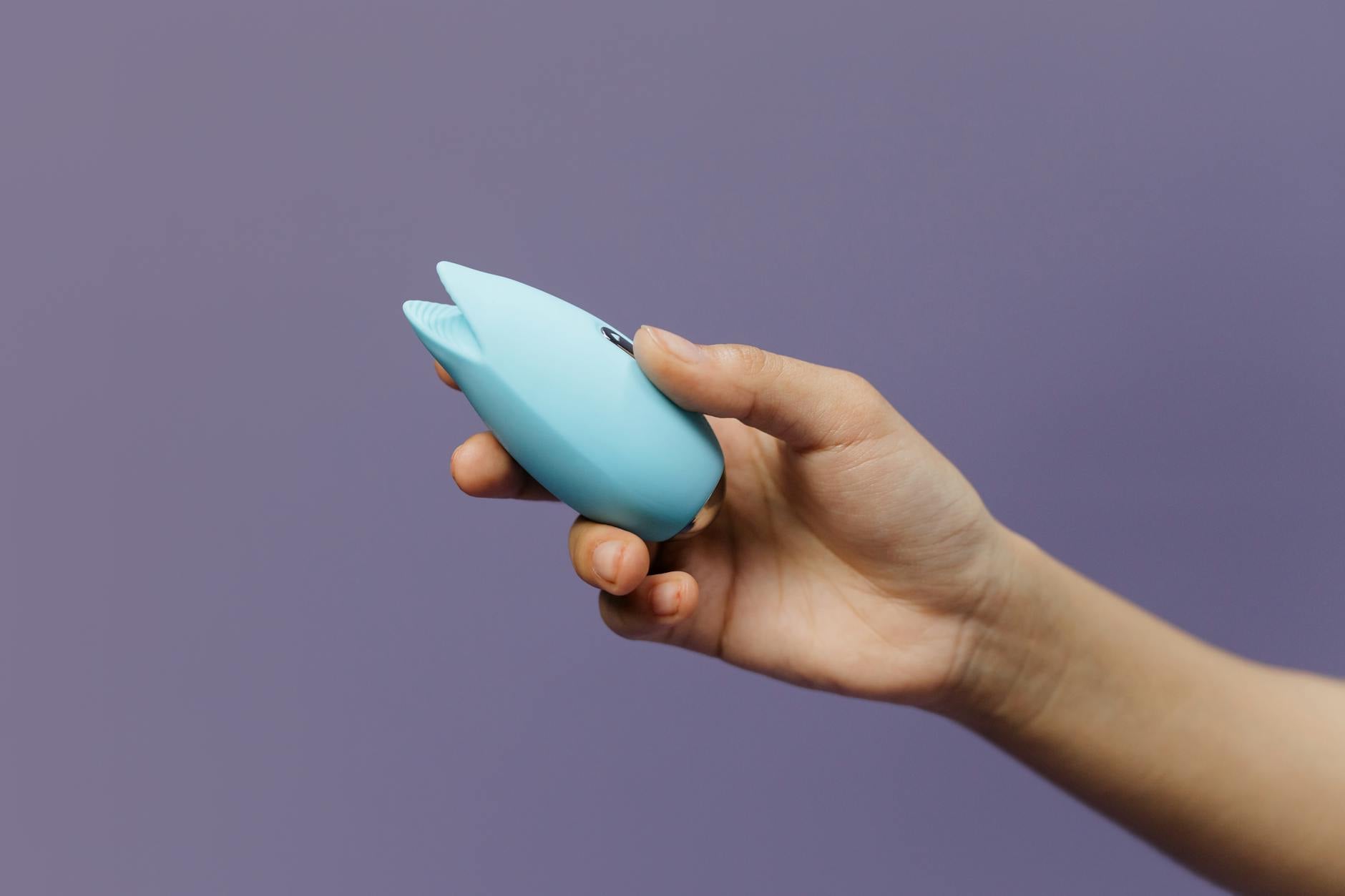
Photo by cottonbro studio on Pexels
What happens after the first time
After you've used a lemon clitoral vibrator with your partner, something shifts. It's not always dramatic. But the door stays open. You've proven that you can ask for what you want and your partner will show up for it. That knowledge changes things.
Many couples find that the conversation itself, separate from the toy, becomes the real transformation. You've normalized the idea of talking about pleasure specifically. You can ask for other things now. You can say what feels good and what doesn't. You can be more alive in your sexuality.
If your partner wasn't interested in helping directly but supported you using lemon vibrators solo, that's also enough. You've still broken the silence. You're still experiencing more pleasure. You're still more aligned.
When the conversation doesn't go as planned
Sometimes it doesn't. Your partner says no. Or they say yes but then act uncomfortable. Or they dismiss it as silly. If that happens, you have information. And information is actually useful, even when it's not what you wanted.
A partner who is unwilling to engage with your sexual needs and desires is showing you something true about the relationship. That doesn't mean you're incompatible. It might mean you need to work with a couples therapist. It might mean you need to have a larger conversation about what you both want from your intimate life. It might mean you need to evaluate whether this relationship can meet you where you are.
But you get to make that choice from a place of clarity, not silence.
FAQ: Asking your partner for pleasure help
What if my partner thinks I'm not satisfied with them?
This is the fear underneath most of the nervousness. Here's the truth: adding pleasure tools doesn't mean someone is insufficient. It means you're expanding. A good partner understands that desire and satisfaction aren't the same thing, and that exploring together can deepen both. If your partner interprets a lemon clitoral vibrator as criticism, that's worth exploring in a bigger conversation about how you both view intimacy.
Can I use a lemon vibrator if my partner isn't interested in being directly involved?
Completely. You can use lemon vibrators solo and have your partner know about it. Many couples find this actually enhances their sex life because one partner isn't pressured to perform and the other gets more pleasure. The key is that your partner knows it's happening, which removes the secrecy.
Is it weird to ask my partner to use the vibrator on me the first time?
Not at all. In fact, partner-applied is often easier for people who are nervous about toys. It removes the self-consciousness of using it in front of someone. Your partner controls the intensity and pacing. It feels more collaborative. Many couples start here.
What if I ask and my partner says they're too shy to be involved?
Respect that. But also know that "too shy" often means "nervous about doing it wrong." You can help by being very specific: "Just hold it here and keep it still" or "Use the lower setting." Sometimes the shyness dissolves once they realize there's no mysterious correct way to do it.
How do I bring this up if we've never talked about sex desires before?
Start with the concrete ask, not the broad conversation. "I've been curious about trying a lemon vibrator and I wanted to ask if you'd be open to that" is easier than trying to have a sweeping talk about your entire sexual future. One conversation births the next.
Should I show my partner reviews or information about lemon vibrators before asking?
It helps. It makes the ask less abstract. You're not asking them to imagine something weird. You're saying "Look, this is a thing that exists, people like it, I'm interested." Normalize it with information.
The thing nobody tells you
Having this conversation is actually a gift to your relationship. Not because the vibrator itself is magical. But because you're saying: my pleasure matters, I want us to be closer, I trust you enough to be vulnerable about this. That's the real intimacy. The lemon vibrator is just the vehicle.
Your partner probably wants you to feel this way. They just need you to say it out loud.
If you're ready to have this conversation and want to explore what a lemon clitoral vibrator could feel like, that's the next step. But start with the ask. Start with the words. Everything else follows from there.
Need help navigating a bigger relationship question? Get in touch at Hallonancys Lemon's contact page.
References
This piece draws on clinical approaches from the Gottman Method, which emphasizes emotional attunement and vulnerability in intimate relationships. For more on communication patterns and desire in long-term partnerships, research from Esther Perel and Sue Johnson's emotionally focused therapy framework informs the conversation structure outlined here.