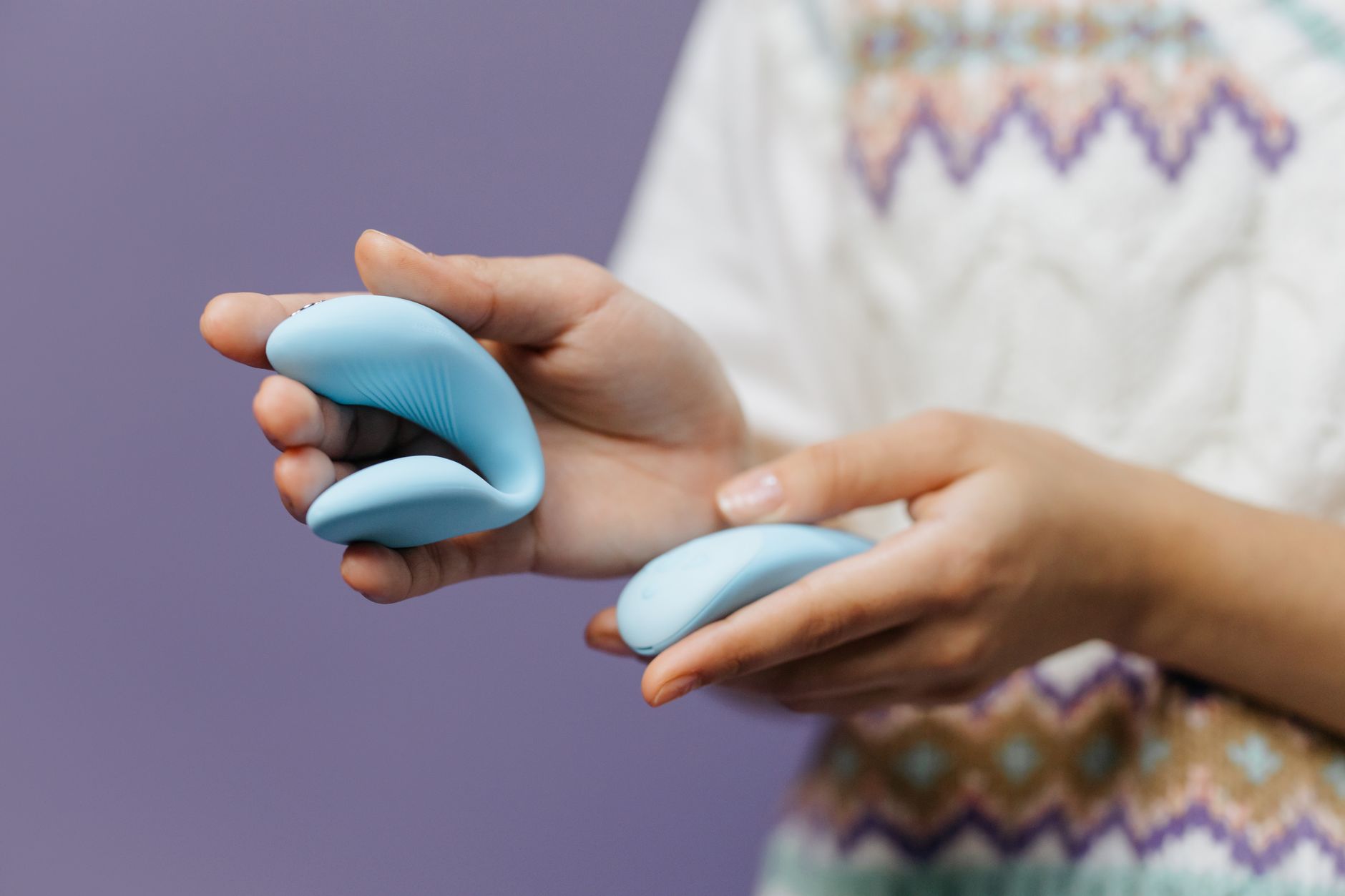
Let's start with the obvious part
Being watched while you pleasure yourself is not the same as masturbating alone. Your nervous system knows the difference immediately. The vulnerability is real, the self-consciousness is real, and so is the potential for something genuinely profound to happen between you and your partner.
Honestly, this is one of the most intimate things a couple can do together. It requires more trust than many sex acts do. So let's talk about how to actually do it in a way that feels good for you, not just brave.
Why your body might respond differently when someone's watching
There are three things happening at once when your partner is present.
First, your nervous system is in a different state. You're hyperaware of your body, which can make arousal harder to find initially. Blood flow to your genitals can literally redirect when you're under social stress. This isn't a flaw in you. It's biology.
Second, there's a mental load you didn't have before. Part of your brain is now managing: "Am I doing this right? Does this look good? Is my partner enjoying this? Am I taking too long?" That's not just distraction. That's cognitive overhead that pulls energy away from sensation.
Third, there's also potential for deeper arousal. Some people find that being truly seen, being desired while they're vulnerable, actually intensifies everything. It depends on your attachment style, your history with this partner, and how much genuine safety you feel.
The setup matters more than you'd think
Where you are changes how your body responds. Three practical shifts I recommend:
Position yourself so you're partially facing your partner. Not full frontal if that feels vulnerable. But angled so they can see your face and part of your body. Eye contact on and off is your secret weapon for managing the psychological part of this. When you need a break from being seen, you can close your eyes. When you want to deepen the connection, you can look.
Give your partner something to do. The worst scenario is them just sitting there watching like it's a performance. Suggest they touch themselves, touch you (if you want), or even just hold your hand. Movement from them settles your nervous system. Stillness from them activates it.
Set a time boundary beforehand. This isn't about rushing. It's about your brain knowing there's an endpoint. Tell your partner: "I'm going to explore for about 15 minutes, and then we can do whatever comes next." Knowing the frame removes a layer of pressure.
How to actually use your lemon vibrator when you're not alone
Start external and slow. Use a lemon clitoral vibrator on the lowest setting, and keep it off your clitoris initially. The outer vulva, the inner labia, the perineum. Let your body wake up gradually. This does two things: it gives your nervous system time to adjust to being watched, and it creates real arousal instead of performing arousal.
Don't rush to your usual patterns. If you normally use your lem vibrator on a specific setting, start one or two settings lower. You have time. Your partner isn't going anywhere.
If your mind goes completely blank, that's normal and okay. You're not broken. Your brain is processing a lot. Give yourself permission to pause, breathe, and reset. Tell your partner: "I need a moment." Most partners find honesty hotter than performance anyway.
When you're ready to increase intensity, do it gradually. Each increase in vibration should take a few minutes. Notice what changes in your breathing, your pelvic floor, the quality of sensation. Your partner is watching your responses, not timing you. Let that be fuel, not pressure.
The emotional piece nobody talks about
After you orgasm (or after you stop, if you don't), there's often a weird emotional release. You might feel exposed, emotional, tender, or suddenly shy. This is completely normal. The vulnerability of being watched, combined with the physiological shifts of arousal and release, activates your parasympathetic nervous system. That's where emotions live.
Tell your partner this might happen. Not to scare them, but to normalize it. If you do get emotional afterward, let it happen. Hold each other. You just did something brave together.
There's also something called "sub drop" that can happen even if you weren't submitting to anything. After vulnerability and intensity, your brain chemistry settles. You might feel a little flat or disconnected for an hour or two. That's not bad. It's just the come-down. Cuddle, hydrate, eat something. It passes.
How to talk about what just happened
Don't make it complicated. Within an hour or so, ask your partner: "What was that like for you?" and tell them what it was like for you. Specific details matter more than poetic language.
"That moment when you said I was beautiful, I could actually feel it change things in my body." Or: "I felt so much pressure about whether I was doing it right that I couldn't actually come, but I want to try again." Or: "I've never felt that seen before, and it was overwhelming in a good way."
If something didn't work, say so. If you need more time next time, say that. If you want to use a different toy, or try it with music, or have them further away next time, say that too. This isn't a one-shot experience. This is a conversation you get to keep having.
Common friction points and how to move past them
"I can't orgasm when they're watching." This is the most common thing I hear. The solution isn't to try harder. It's to let your nervous system regulate first. Try it a few times without the goal of orgasm. Just explore sensation. Once your body learns it's safe to be watched, orgasm often follows naturally.
"They seemed bored or uncomfortable." Ask them directly. Don't assume. They might have been entranced and just quiet. Or they might have found the first time strange. Both are fine information.
"I felt like I was performing, not enjoying myself." That means something about the setup isn't working. Maybe your partner being so close feels like too much. Maybe you need more cushions and support so your body feels held. Maybe you need to be the one initiating movement each time instead of it being passive. Adjust until it feels authentic.
When to add a lemon vibrator back into shared sex
After you've used your lemon clitoral vibrator solo while your partner watches, you might want to incorporate it into partnered sex. Start slow with that too. Use the vibrator on yourself while your partner is inside you or touching you elsewhere. Or have them hold it while you guide the intensity and movement.
The Lem or other lemon sucker toys work particularly well here because they don't require constant pressure. You can ease intensity in and out, which gives both of you time to adjust and communicate what feels good.
The trust payoff
Once you've done this a few times and it stops feeling like a big performance, something shifts. You realize your partner has watched you be completely yourself, vulnerable and powerful at the same time, and they're still there. They're still turned on. They still desire you.
That's not a small thing. That's the foundation of deeper intimacy. You've literally shown your partner your pleasure, and they've shown you they want to see it.
Frequently Asked Questions
Can I use the same lemon vibrator on myself and with my partner watching?
Absolutely. Just make sure it's clean before and after using it during partnered activity. Water-based lube helps if there's going to be contact between the vibrator and your partner's body.
What if I want to orgasm but can't when they're watching?
That's a nervous system response, not a failure. Try practicing this a few times without the expectation of orgasm. Once your body learns it's safe to be watched, pleasure often follows naturally. Some people also find that closing their eyes helps them focus on sensation instead of visibility.
How do I tell my partner I want them to watch?
Direct is best. "I've been thinking about this, and I'm interested in exploring using my vibrator while you're present. Would you want to try that?" Explain what appeals to you about it. Is it vulnerability? Feeling desired? Deepening intimacy? The reason matters to them.
What if my partner seems uncomfortable or judgy?
That's worth a separate conversation outside the bedroom. Their discomfort might be about their own insecurities, not about you. A conversation like: "I noticed hesitation when I mentioned this. What came up for you?" can open things up. If it's genuinely not something they want to do, that's their boundary and it's valid. You get to decide if that works for you in this relationship.
Should I shave, groom, or make myself look a certain way?
No. Do whatever makes you feel confident. Some people feel better groomed, some feel better natural. Your partner is there to watch you enjoy yourself, not to see a specific aesthetic. If you want to do something for your own confidence, great. Don't do it for them.
How do I make sure my partner doesn't pressure me to do things I'm not comfortable with?
Set boundaries before you start. "I want to do this on my timeline. If I want to stop, we stop." And mean it. The hottest thing about being watched is feeling fully in control of your own pleasure. If your partner respects that, you can relax into it. If they push, that tells you something important about how they treat your boundaries.
The bottom line
Using a lemon vibrator when your partner is watching is an act of trust that goes both ways. You're trusting them to hold space for your vulnerability. They're trusting you to let them in. When it works, it builds a kind of intimacy that's hard to find anywhere else. Start slow, communicate clearly, and give yourself permission to adjust along the way. Your pleasure matters. Being seen matters. Both together is worth exploring.