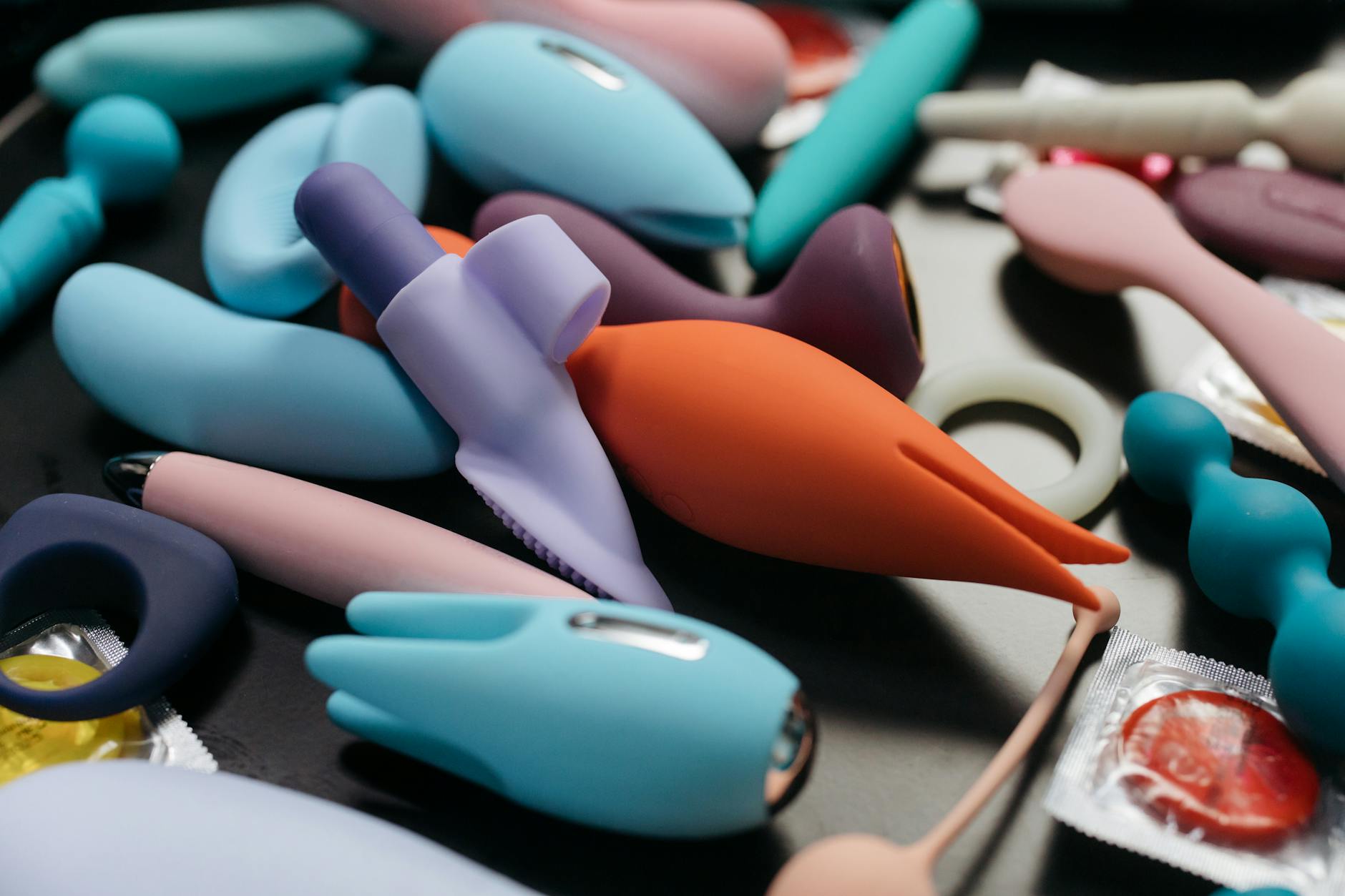
Let's name what's actually happening
You've spent 20, 30, maybe 40 years having sex the way your partner wanted it. That's not a judgment. It's just the math of long-term relationships. You learned to read their rhythm, their preferences, their timeline. Your own desire became a secondary instrument in someone else's symphony.
Now you're alone. And you're realizing you don't actually know what you want anymore.
This is wildly common, and it's also completely fixable. Solo exploration after decades of partnered sex isn't about rediscovering a teenage version of yourself. It's about becoming the person you are right now, on your own terms, with your own hands (and maybe a lemon clitoral vibrator) doing the work.
Why solo pleasure feels different now
There's pressure in partnered sex that you probably didn't even notice was there. Performance pressure. The need to come within a certain timeframe. The weight of someone else's experience depending on your response. Even in a healthy, generous relationship, there's an invisible structure.
When you're alone, that structure disappears. And suddenly the freedom feels enormous and terrifying in equal measure.
Your body also changes. If you're over 40, arousal takes longer now. Sensitivity patterns shift. Orgasms feel different, sometimes deeper, sometimes more scattered. If you haven't been paying attention to your own pleasure in years, these changes can feel like loss. They're actually just different.
Here's the plot twist: this is the ideal time to start using lemon vibrators or other clitoral vibrators. Not because your body is broken, but because you finally have the space to figure out what actually works for you, without anyone else's needs in the room.
Starting with the right headspace
You can't think yourself into solo pleasure. You have to feel yourself into it.
That means scheduling time that actually feels protected. Not "I'll masturbate when I get around to it." That rarely works for people returning to solo play after years away. Set a time. Thirty minutes. Lock the door. Phone off.
Before you touch anything, sit with the resistance for two minutes. Notice it. Let it be there. People who've spent decades prioritizing a partner's pleasure often feel selfish when they prioritize their own. That feeling is real and it's not a sign you should stop. It's a sign you're doing something important for yourself.
Then let it go and start.
How to use a lemon vibrator for solo exploration
If this is your first time with a clitoral vibrator, start with the lowest setting. You might think you want intensity. You probably want novelty and permission first.
Begin by touching yourself without the vibrator for five minutes. This sounds basic, but it matters. Your hands remember rhythm and pressure. Let that be the foundation.
When you're ready, turn on a lemon sexual toy like the Lem on pattern one and let it make contact with the outer labia first, not the clitoris directly. Your nerve endings are dense there, and this builds anticipation without overwhelming sensitivity.
Take your time finding what makes you pause, what makes you breathe deeper, what feels like "yes." This is the opposite of partnered sex, where you're often racing toward a goal. Solo exploration is about curiosity.
If it takes 20 minutes to find your rhythm, that's normal now. Your arousal takes longer. That's not a problem. That's permission to go slower than you ever did before.
The permission piece
Honestly? The biggest barrier to solo pleasure after partnered sex isn't physiological. It's psychological.
You've internalized the idea that your pleasure is something that happens to you, in response to someone else's effort. Realizing that you can generate your own pleasure, that you deserve it, that your desire matters when no one else is in the room—that's the real work.
When you're using lemon vibrators or any clitoral vibrator alone, you're not practicing for anyone. You're not checking a box. You're sending yourself the message that your pleasure has value independent of someone else's involvement. That your body matters. That what you want is worth your own time and attention.
It's radical. It's also why so many people report that returning to solo pleasure after years away feels like falling back in love with themselves.
What to expect, honestly
Your first few times might feel weird. You might feel self-conscious even though no one's watching. Your mind might wander. You might not orgasm, or you might orgasm immediately because you're finally paying attention to your own body.
All of that is fine.
If you're not climaxing, that doesn't mean lemon vibrators aren't working. It means you're building a new nervous system response, a new relationship with your own desire. That takes time. Three, four, sometimes six sessions before something shifts.
If you're climaxing and it feels different than it used to, that's also fine. Orgasms change throughout your life. Intensity changes. Duration changes. That's not loss. That's evolution.
When to adjust your approach
If penetration used to be your primary pleasure and it feels less intense now, try clitoral focus instead. Most people with vulvas require clitoral stimulation to orgasm anyway. A lemon clitoral vibrator or lemon sucker gives you precision without the fatigue that comes from using your hands alone.
If you're dealing with pain—genuine discomfort, not just unfamiliar sensation—stop and check in with a gynecologist. Genitourinary syndrome is real and treatable. Don't push through pain.
If you're using antidepressants or other medications that dull sensation, give yourself more time. You're not broken. Your nervous system is working with different input. A good vibrator can help bridge that gap, but it's not instant.
Building a sustainable solo practice
The goal isn't to masturbate constantly. It's to keep yourself connected to your own desire as a normal, regular part of your life.
Many people find that once they establish a solo routine, their overall sense of pleasure expands. You feel more comfortable in your body. Sexual confidence shows up in other areas of life. You know what you want, and asking for it becomes less terrifying.
If you do eventually have a new partner, you're starting from a place of knowledge instead of absence. You know what your body responds to. You know what you're looking for. That's an enormously powerful position.
Use your lemon vibrator weekly, or whenever you feel the pull. Solo pleasure doesn't have to follow a schedule. It just has to follow your own curiosity.
The bigger picture
Returning to solo pleasure after decades of partnered sex isn't about replacing a partner or proving anything. It's about reclaiming a part of yourself that got quiet in service of someone else's needs.
Your body remembers pleasure. Your nervous system remembers response. Sometimes it just needs permission and the right tool to access those memories again.
People also ask
How long does it take to feel comfortable with solo pleasure again after decades of partnered sex?
There's no standard timeline, but most people report feeling significantly more comfortable within four to six weeks of consistent practice. Comfort isn't about orgasming on command. It's about relaxing into the experience without self-judgment. Give yourself at least a month before deciding whether solo exploration is right for you.
Is it normal to feel guilty about solo pleasure when you're in a relationship?
Completely normal, and worth examining. Some guilt comes from internalized ideas about sexuality—the belief that your pleasure is only valid when it's partnered or when it serves someone else. Other guilt is contextual; if your relationship involves infidelity or if you're using solo pleasure as a way to avoid intimacy with your partner, that's worth discussing with them or a therapist. But solo pleasure in a healthy relationship? That's not guilt-worthy. That's self-care.
Can lemon vibrators help if I've lost interest in partnered sex but still want solo pleasure?
Yes, and this is actually important information. Sometimes loss of interest in partnered sex means the relationship dynamic needs attention. Sometimes it means you need to reconnect with your own desire first. Solo exploration with tools like lemon clitoral vibrators can help clarify what you actually want—more time alone, different kinds of touch, better communication with your partner, or something else entirely. Don't rush to conclusions. Explore first.
What's the difference between a lemon vibrator and other clitoral vibrators?
Lemon vibrators like the Lem use suction stimulation rather than direct vibration, which many people find gentler on sensitive tissue and more similar to oral sex. Other clitoral vibrators use buzzing or pulsing patterns. There's no "better" option—it depends on what your body responds to. If you're starting from scratch, suction-based options like lemon sexual toys can feel less intense than traditional vibrators, which makes them a good entry point for solo exploration.
How do I know if I should see a doctor before starting to explore solo pleasure again?
If you experience pain during arousal or penetration, see a gynecologist. If you've been on hormonal birth control or antidepressants for years, a conversation with your doctor about how those affect desire and sensation can be helpful, but you don't need permission to start exploring. If you have vaginismus or pelvic floor tension, your doctor or a pelvic floor physical therapist can provide specific guidance. Otherwise, you can explore solo and notice what your body tells you.
Can solo pleasure with lemon vibrators improve my sex life with a future partner?
Absolutely. When you understand your own response patterns, your pleasure timeline, and what actually turns you on, you bring that knowledge into partnered sex. You're less likely to flinch from pleasure, less likely to perform, more likely to be honest about what feels good. That honesty is magnetic. Partners respond to it. And your own confidence in your body creates better sex for everyone involved.
If you're ready to explore solo pleasure after years away, start simple. Set the time. Give yourself permission. And remember that reconnecting with your own desire is an act of self-respect, not selfishness. Your pleasure matters. Always has. You're just finally paying attention.
Have questions about getting started? Reach out—we're here to help.