
Let's name what actually happens
Grief doesn't just affect your mood. It turns off the parts of your nervous system responsible for desire, arousal, and pleasure. Your brain is busy processing loss. Your body is tired. The last thing that feels natural is sex. And here's what nobody tells you: that's actually completely normal, and it doesn't mean you're broken or that you'll never want sex again.
What complicates things is the guilt. You might feel guilty for wanting sex while grieving. Or guilty for not wanting it. Or guilty because your partner is grieving differently than you are. The second you layer guilt on top of grief, reconnecting to pleasure becomes psychologically harder, not just physically harder.
The timeline myth
There's no standard timeline for returning to sex after loss. Some people feel ready within weeks. Others take months or years. Both are okay. The dangerous move is pretending you're ready before you actually are, or waiting for some external clock to tell you it's time.
I've worked with clients who lost a parent, a child, or a partner. The ones who rebuilt sexual intimacy most successfully were the ones who asked themselves one honest question first: "Do I actually want this right now, or am I doing this because I think I should?" That distinction changes everything.
Why pleasure might feel wrong at first
Three reasons your body might resist:
1. Your nervous system is dysregulated. Grief keeps you in a low-grade stress state. Your parasympathetic nervous system, the one responsible for arousal and relaxation, is offline. You can't force it back online through willpower.
2. Pleasure without the person who used to share it feels disloyal. If you lost a partner, sex with someone new (or even with yourself) can trigger a weird guilt. If you lost someone else, the guilt is different, but it's still there. This is grief logic, and it's real even when you intellectually know it doesn't make sense.
3. Your body feels unfamiliar. Grief ages you. Some people say they look in the mirror and don't recognize themselves. That embodied loss makes touching your own body feel like touching a stranger's.
Why lemon vibrators work differently for this
Lemon clitoral vibrators like those from Hallonancys Lemon bypass some of the friction that makes solo pleasure feel heavy right now.
With manual stimulation, you have to be present, coordinated, and generating momentum. That requires an energy you might not have. A lemon vibrator does the work for you. You set it, adjust the intensity if needed, and let it do its job. That removes the performance element, which is huge when you're grieving.
Second, air-suction technology (like what you get with a lemon vibrator) creates a different sensation than traditional vibration. It feels less like friction and more like a gentle suction or pulling. For people coming back to pleasure after a break, that gentleness matters. You're not pushing yourself into sensation. Sensation is coming to you.
Starting again: the framework
If you've decided you're ready to reconnect with pleasure, here's how to do it without retraumatizing yourself.
Phase one: permission. Set aside 20 minutes. Light a candle, take a shower, whatever signals "this is intentional" to your brain. The goal here is not orgasm. The goal is to get reacquainted with your body without judgment. Touch yourself. Notice what feels okay. A lemon vibrator is optional in this phase. If it feels right, use it. If it doesn't, skip it. The permission is the whole point.
Phase two: low stakes. You're going to use your lemon vibrator, but at the lowest intensity setting. Keep it there for a few sessions. Your nervous system needs to remember that pleasure is safe before you ask it to build. This might take a week or longer. That's normal.
Phase three: follow your body. Once low intensity stops feeling foreign, you can turn it up. But only if you want to. You're not on a timeline. You're following what your body is asking for, not what you think it should be asking for.
If you're with a partner
Here's where most people's good intentions derail. You're both grieving. They want to reconnect physically. You're not sure you're ready, but you also don't want to hurt them or make them feel rejected. So you have sex anyway. And it feels hollow, which then makes you both feel worse.
Instead, have a conversation that's separate from sex itself. "I want to reconnect with you physically. I'm not there yet, but I'm thinking about it" is a real, useful thing to say. It keeps the door open without forcing it.
When you do want to bring your partner back in, a lemon vibrator is actually a brilliant bridge. It removes some of the pressure from your partner to "perform" or "know what to do." They can be present and touch you elsewhere. You control the intensity. It becomes collaborative without being about your partner's physical performance. For people rebuilding after grief, that shift is everything.
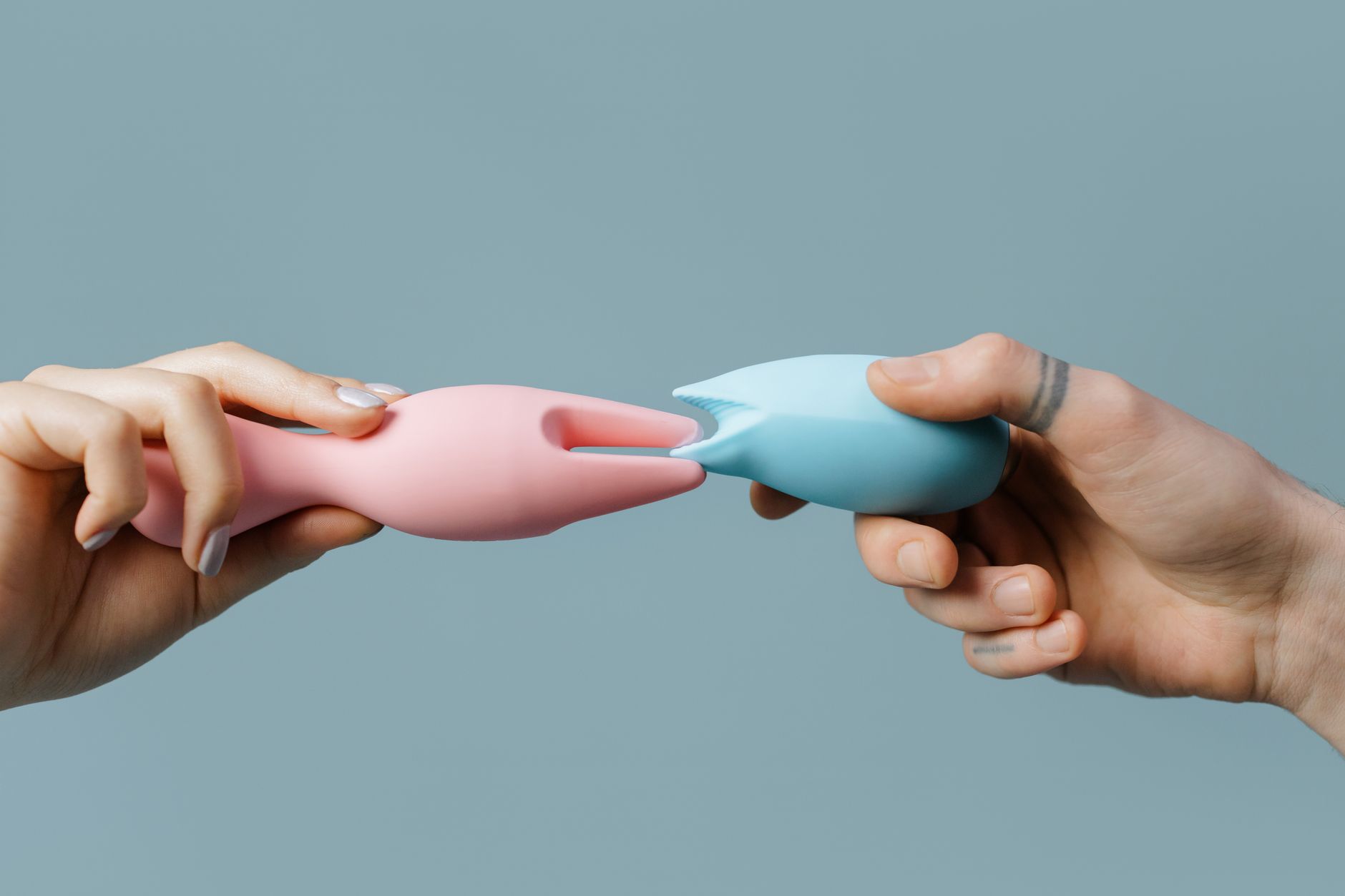
Photo by cottonbro studio on Pexels
The guilt piece (because it matters)
You might feel guilty for wanting pleasure while someone is still hurting. You might feel guilty because pleasure feels trivial compared to the loss. Here's what I want you to know: grief and pleasure aren't opposites. Your capacity for both can exist at the same time.
That said, if guilt is the dominant feeling when you try to reconnect, you're probably not ready yet. Guilt is a signal. It's telling you that some part of you hasn't actually agreed to this yet. That's not something to push through. That's something to listen to.
If you're a few weeks in and the guilt isn't shifting, talking to a therapist who specializes in grief makes sense. There's nothing wrong with needing professional support to get unstuck.
When sensation might feel flat
Some people come back to pleasure and feel... nothing. You're using a lemon vibrator. It's working correctly. But you feel numb or distant from the sensation. This is completely common in grief. Your nervous system is still protecting you.
If this happens, don't assume the tool isn't working. Instead, slow down further. Try using it while lying down, fully clothed, just to get your body used to the sensation without the demand to feel aroused. Spend time in this phase. Your nervous system will catch up.
The turning point
You'll know you're genuinely ready when pleasure stops feeling like an obligation or a test, and starts feeling like something you actually want. It might be specific. "I want to feel this, with this person, at this time." Honor that. That's your nervous system telling you it's safe to come back.
Grief doesn't end because you have sex again. But reconnecting to pleasure, even gently, with patience, with tools like a lemon vibrator that remove some of the friction and pressure, signals to your body that you're not living in crisis mode anymore. You're slowly coming back to life. That matters.
People also ask
How long should I wait after a loss before trying to have sex again?
There's no set timeline. Some people feel ready in weeks. Others take months or years. The right timeline is the one that feels honest for you, not the one you think you should follow. If you're asking yourself "Should I be ready yet?" rather than "Am I actually ready?" you're probably not there yet. That's okay. Grief isn't a race.
Can using a lemon vibrator help rewire my nervous system after grief?
Using a lemon clitoral vibrator can help signal safety to your nervous system. The consistent, predictable sensation, without pressure to perform, can gradually reintroduce your body to pleasure in a low-stakes way. But rewiring is gradual. Stick with it for a few weeks before deciding if it's working. Often, the shift happens quietly.
What if I feel guilty using a vibrator while grieving?
Gilt is a message, not a directive. Sit with it. Is it telling you that you're not actually ready? Or is it telling you that pleasure feels frivolous while someone is hurting? Those are different problems with different solutions. A therapist can help you untangle that. If the guilt is about loyalty to someone who died, that's common and worth working through with professional support.
Should my partner know I'm using a lemon vibrator while reconnecting?
That depends on your relationship and what feels right to you. Some couples find it helpful to be transparent. Others don't discuss it. What matters is that you're not hiding it out of shame or secrecy. You're simply keeping part of your sexual life as your own, which is healthy and normal.
How do I know if I'm using a lemon vibrator too soon?
If you're using it and feeling numb, disconnected, or like you're performing grief, you might be moving too fast. Pause. Go back to the permission phase. Let your body lead. Coming back to pleasure after loss isn't about rushing to feel normal again. It's about gently signaling to your nervous system that safety exists.
What if grief makes me not want pleasure at all, even long term?
Some people experience a lasting shift in their relationship to sex and pleasure after major loss. That's not failure. That's your life changing. If you've waited a reasonable amount of time, worked with support, and you genuinely don't want to reconnect to pleasure, that's information about who you are now, not about whether something is wrong with you. Honor it.
What comes next
Rebounding isn't the goal. Reconnecting, gently, is. If you're feeling stuck or like you need support navigating grief and sexuality together with a partner, reach out to us. And remember: your nervous system heals on its own timeline, not anyone else's. Give it the space it needs.