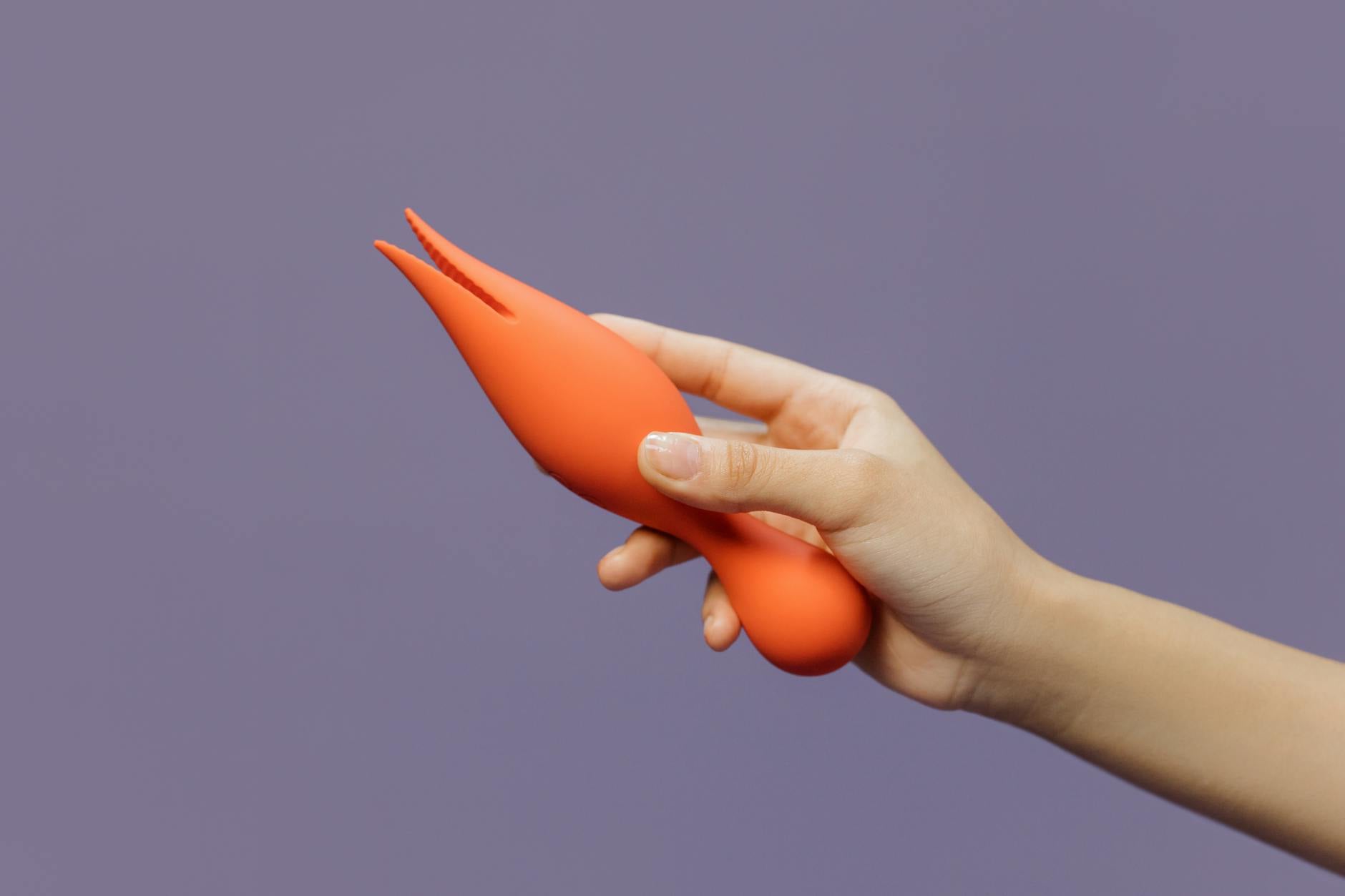
The mute button nobody talks about
You're touching yourself and nothing's happening. Or something's happening, but it's happening in slow motion, like your body is on a 15-minute delay. The sensation is there, somewhere, but it feels muffled. Distant. Like you're watching pleasure happen to someone else.
This isn't dysfunction. This is a signal that your nervous system needs a different kind of input.
Why arousal gets quiet
Sensation delay happens for several reasons, and most of them are fixable.
Stress is the obvious culprit. Your body prioritizes threat detection over pleasure. When cortisol is high, blood flow shifts away from the genitals and toward your muscles and brain. The nerve endings are still there, firing away, but the signal feels dampened. It's like trying to hear a conversation in a noisy room. The voices are present. Your brain just can't tune in.
Anxiety works differently but lands in the same place. If you're thinking about whether you're taking too long, whether your partner is bored, whether your body looks right, those thoughts are occupying the bandwidth that would normally process pleasure. The sensation arrives, but your attention is elsewhere.
Medication changes are another big one. SSRIs, certain blood pressure meds, and even some antihistamines can slow arousal or flatten sensation. Your body isn't broken. It's just operating under different neurochemical conditions. The same thing happens after hormonal shifts, whether from stopping birth control, aging, or other life changes.
When sensation feels distant, lemon clitoral vibrators become unexpectedly valuable. Here's why.
Why vibration cuts through the noise
A vibrator delivers consistent, high-frequency stimulation that your nervous system can't ignore. It's not about force. It's about pattern and frequency.
When sensation feels muted, your body may be waiting for stronger input before it registers pleasure. Traditional manual stimulation, because it varies in pressure and rhythm, sometimes gets lost in the static. A lemon vibrator delivers the same sensation hundreds of times per second. Your nerves notice. Your brain registers it. The signal gets through.
This is especially true with air-suction lemon vibrators. Instead of vibration alone, they create a seal and pulse around the clitoris. The stimulation pattern is different from what your hand can do, which means it bypasses some of the "I've felt this before" dampening your nervous system might have developed. It's novelty and intensity working together.
How to start when everything feels numb
If sensation is genuinely muted, the temptation is to reach for the strongest vibrator at the highest setting. Resist that.
Instead, start at a lower intensity and spend 15-25 minutes with it. This isn't foreplay. This is training your nervous system to pay attention again. Use the lemon vibrator on its gentlest setting and simply notice what you feel. Not what you think you should feel. What's actually there.
Many people report that at low intensity, the sensation sharpens after a few minutes of focus. Your brain is learning to tune back in. If you jump straight to intensity level 5, you're more likely to get used to it quickly and need to escalate further. You also risk irritation if your tissues are already sensitized.
The second thing is timing. If stress or anxiety is what's muting your sensation, try using your lemon vibrator earlier in your day or self-care routine. It sounds counterintuitive, but some people find that pleasure feels more accessible in the morning or early afternoon when their nervous system is less activated. Evening, after a stressful day, is often when sensation feels most distant.
The warm-up that actually works
Here's what I recommend to almost every client dealing with delayed arousal.
Before you use any vibrator, spend 5-10 minutes bringing your body temperature up. A warm shower, a few minutes of movement, or even just rubbing your arms and legs increases blood flow systemwide, including to the genitals. This isn't magic. It's physiology. Warmer tissue is more responsive tissue.
Then, when you reach for your lemon clitoral vibrator, apply a good water-based lubricant first. This does two things. One, it reduces friction and makes sensation feel more uniform. Two, the act of applying lube is grounding. You're touching yourself with intention. You're saying to your nervous system: "This matters. Pay attention."
Start at intensity 1 or 2 and stay there for 5 full minutes before adjusting. Your clitoris has thousands of nerve endings, but when sensation is muted, those nerves need time to wake up. Patience here pays off.
If you're using a pulsing or pattern-based lemon vibrator like the Lemon Clitoral Vibrator, experiment with the patterns as much as the intensity. Sometimes a rhythm that builds gradually works better than constant vibration when you're dealing with muted sensation.
When to adjust your approach
If after 20-30 minutes of consistent lemon vibrator use you're still not feeling much, your mute button might have a different cause.
If you're taking an SSRI or other medication that's known to flatten sensation, this might be a conversation to have with your prescriber. Sometimes dosage adjustments or timing changes (taking the pill at night instead of morning, for example) can shift how you feel. Sometimes a different medication works better for your body.
If you've recently stopped hormonal contraception or are in a period of hormonal change, sensation lag often improves within a few weeks as your body rebalances. The Lemon Clitoral Vibrator or other lemon sexual toys can help you stay connected to pleasure during that adjustment period.
If stress or anxiety is the culprit, the vibrator is a useful tool but it's not the whole answer. Some of the most helpful interventions are the boring ones: prioritizing sleep, moving your body during the day, reducing caffeine, setting boundaries around work. A lemon vibrator can help you access pleasure despite those conditions, but it won't override them entirely.
The partner component
If you're using lemon clitoral vibrators with a partner and sensation still feels muted, the problem might be relational rather than physical.
Emotional connection profoundly affects how sensation registers. If there's tension in the relationship, if you don't feel safe, or if you're managing your partner's feelings instead of your own pleasure, your nervous system will prioritize self-protection over sensation. A vibrator won't override that. What helps is the same thing that helps everything else: honest conversation and, if needed, support from a relationship coach or therapist.
When both partners are present and the connection is solid, many people find that sensations sharpen and orgasm arrives more readily. If that's not your experience, that gap itself is valuable information.
FAQ: Muted sensation and lemon vibrators
Can using a lemon vibrator make muted sensation worse?
No. What can happen is that your body gets temporarily used to one sensation pattern, which then feels less intense until you switch it up. This is normal nervous system adaptation, not damage. Rotating between different lemon clitoral vibrators, changing intensity levels, or taking breaks (a few days off every couple of weeks) all help reset that adaptation.
How long does it take for sensation to feel normal again?
It depends on the cause. If stress is the issue, 2-3 weeks of regular relaxation and self-care usually shows improvement. If it's medication-related, it can take 6-12 weeks for your body to adjust to a new drug, or days if you change timing or dosage. If it's hormonal, anywhere from a few weeks to a few months as your body rebalances. Consistent, patient lemon vibrator use during this time keeps you connected to pleasure while you wait.
Should I use my lemon vibrator on the highest setting if sensation feels far away?
No. Start low and stay low for several sessions. Your nervous system needs time to re-tune. High intensity from the start often leads to temporary numbness, which makes the problem worse. Low intensity, consistent use, and patience work better.
Does lube really make a difference when sensation is muted?
Yes. Lube changes the texture of stimulation. It reduces friction noise and makes sensation feel more uniform and pronounced. Even if you self-lubricate, adding a bit more water-based lube can sharpen the signal your nerves receive.
Can muted sensation be a sign of something serious?
Sometimes. If muted sensation is sudden, if it's accompanied by pain, or if it's affecting your whole body (not just during sex), talk to a doctor. Most causes of delayed arousal are reversible, but medical evaluation rules out nerve issues or other conditions that need attention.
Do different lemon sexual toys work better when sensation is muted?
It varies by person. Some people find that the broadness of an air-suction lemon vibrator is more effective when sensation is muted because the stimulation pattern is harder to ignore. Others respond better to precision lemon clitoral vibrators. If you have access to different tools, trying both tells you which pattern your nervous system prefers right now.
Bringing sensation back
Muted pleasure is temporary. It's frustrating and it can feel like loss, but it almost always responds to adjustment. Whether you're using a lemon clitoral vibrator, addressing stress, tweaking medication timing, or working with a partner to deepen connection, the pattern is the same: you're creating conditions where your nervous system can register pleasure again.
Patience matters more than intensity. Consistency matters more than novelty. And the fact that you're paying attention to what you feel, rather than ignoring it or pushing through, is where the real shift begins.
If you're struggling with this, you don't need a fix. You need a framework. We can help with that. Reach out to us to discuss what might work best for your situation.