Here's what nobody tells you about hormonal birth control and sensation
You start the pill (or the ring, or the patch, or the shot) for one reason. Then six weeks in, you notice something's different. Not bad. Just... muted. Like you're watching pleasure happen to someone else instead of feeling it directly. That's not your imagination, and you're not broken. That's hormonal birth control doing exactly what it's designed to do.
The synthetic hormones that prevent pregnancy also change how your brain processes arousal, how much blood flows to your genitals, and how your body manufactures natural lubrication. Your desire might flatten. Your orgasms might take longer or feel less intense. The whole experience can feel like it's behind frosted glass. And then people tell you it's all in your head, which somehow makes it worse.
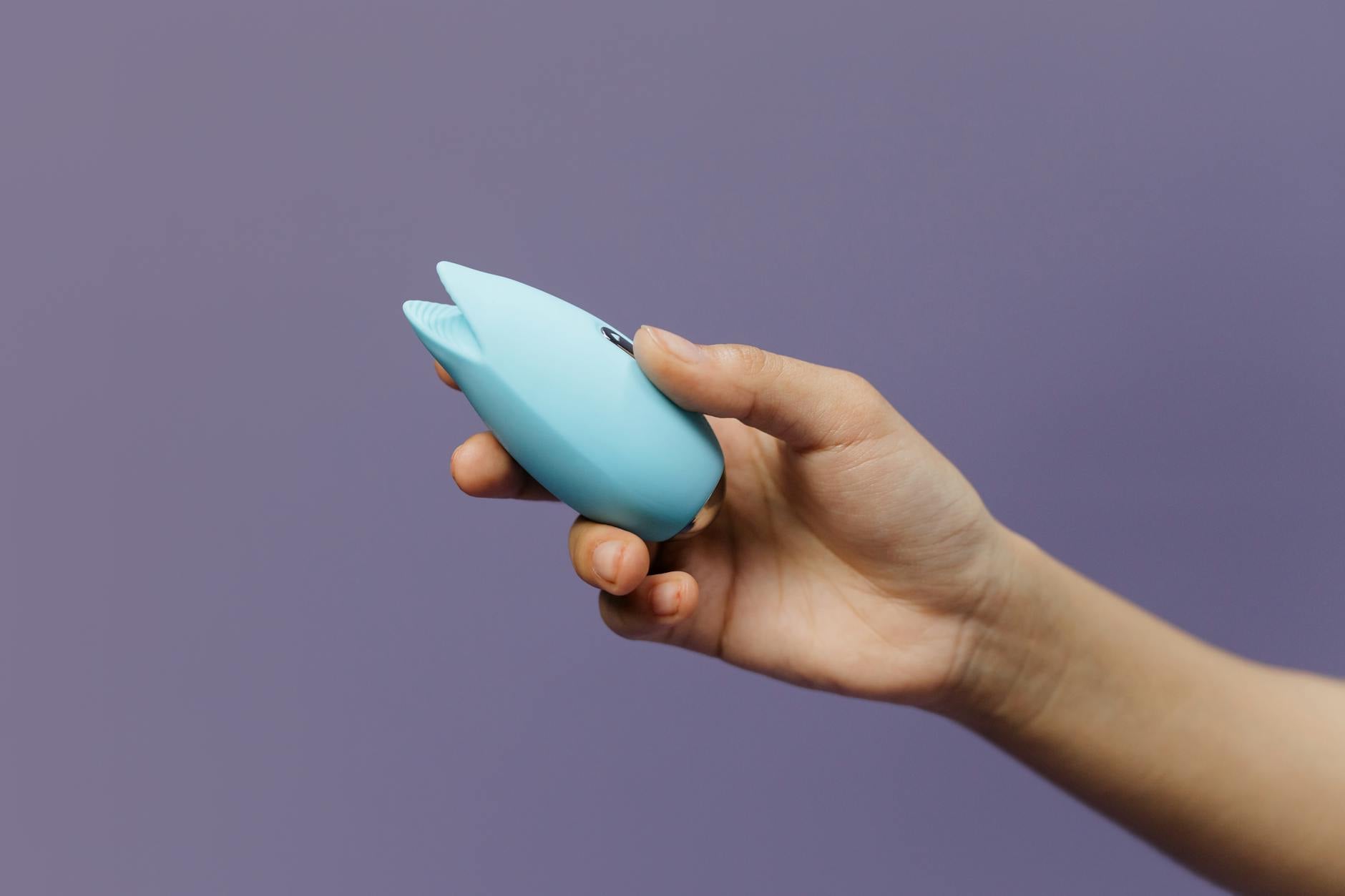
Lemon clitoral vibrators work particularly well during these changes because they bypass some of the friction that hormonal shifts make uncomfortable, and they introduce consistent stimulation that your nervous system can actually register even when sensation feels quiet.
What hormonal birth control actually does to arousal
Let's start with the physiology so you understand what you're working with.
Hormonal contraceptives suppress the hormones that drive arousal. Testosterone drops. Estrogen levels flatten instead of rising and falling with a cycle. Progesterone stays elevated. This hormonal floor is what prevents ovulation, but it also means your brain isn't getting the same neurochemical signals that usually spark desire.
Your vulva also changes. Estrogen supports the thickness and elasticity of vaginal tissue and drives lubrication. When estrogen drops (or stops cycling), tissue gets thinner and drier. Blood flow to the clitoris decreases. The whole system needs more time to warm up and more direct stimulation to register.
Here's what makes this tricky: you haven't lost the capacity for pleasure. Your neural pathways for orgasm are intact. Your clitoris still has all 8,000 nerve endings. But the speed and intensity of arousal have changed, and the signal strength feels quieter. Many people describe it as needing to "turn the volume up" to feel the same sensation they felt before.
Why sensation feels different on hormonal birth control
Three concrete things happen.
Reduced genital blood flow. Arousal works through vasocongestion: blood rushes to your genitals, tissue swells, sensation heightens. Hormonal contraceptives, especially those with stronger progestins, constrict blood vessels slightly. Your arousal response is slower and less pronounced. It's not absent. It's just quieter.
Lower testosterone means lower baseline desire. Testosterone isn't just a male hormone. People with vulvas produce it in the ovaries and adrenal glands, and it's a major driver of sexual motivation and clitoral sensitivity. Hormonal birth control suppresses it. Some people adapt within months. Others struggle for years. Both are normal.
Decreased lubrication and tissue changes. Without cycling estrogen, your vaginal environment changes. You might need more lubrication. Tissue might feel thinner or more sensitive to friction in ways that make penetration uncomfortable. Some people describe it as a dryness that lubricant alone doesn't fully address. It's not a problem you can solve with water-based lube alone, though lube definitely helps.
How lemon vibrators restore sensation when birth control mutes it
Let's get to what actually works.
Lemon clitoral vibrators use air-suction technology rather than traditional vibration. That matters because suction stimulates in a way that doesn't depend on the tissue thickness, lubrication level, or blood flow status that hormonal changes affect. You're not relying on friction or the body's natural swelling response. You're introducing consistent, pleasurable pressure that your nervous system registers directly.
This is especially helpful when sensation feels muted because:
The stimulation pattern is independent of arousal level. A traditional vibrator works better when you're already aroused because your tissue needs to be engorged to feel the sensation fully. A lemon sucker creates pleasure through suction, which works whether you're fully aroused or still warming up. This matters enormously when hormonal birth control has flattened your arousal curve.
Suction feels different than vibration. Your clitoris responds to multiple types of stimulation. The sustained pressure of suction activates different nerve pathways than the rapid micro-movements of a vibrator. Some people find that when traditional vibration feels muted, suction feels entirely new. Your nervous system hasn't adapted to it yet, so it registers as intense even though you might be using moderate settings.
You don't need maximum lubrication. Because a lemon clitoral vibrator uses suction rather than friction, you're not relying on the level of natural lubrication you produced before birth control. That said, adding a small amount of water-based lubricant around the opening of the cup can make the seal feel smoother and the sensation more consistent. It's a tool that works even when your body's natural response is compromised.
That's why so many people on hormonal contraceptives report that lemon vibrators help them access pleasure that feels blocked with other toys. It's not that other toys stop working. It's that this design compensates directly for the specific sensory changes hormonal birth control creates.
Practical adjustments for using lemon vibrators on hormonal contraceptives
If you're noticing that sensation has flattened since starting birth control, here's how to use a lemon clitoral vibrator effectively.
Start with lower intensity levels. Your clitoris hasn't lost sensitivity. It's just receiving a quieter signal from your brain. Give it time to respond. Start on pattern 1 or 2, warm up for 10 to 15 minutes, and let sensation build. You might find that moderate settings feel more intense than you expected once you've warmed up fully.
Extend your warm-up time. Hormonal birth control extends the time your body needs to build arousal. Budget 15 to 25 minutes before you introduce the lemon vibrator. Spend that time on whatever helps you feel desire. Porn, erotica, fantasy, your partner's touch, your own touch. This isn't wasted time. This is part of using the toy.
Experiment with positioning and pressure. The cup of a lemon vibrator seals around your clitoris, but the level of pressure you create matters. You can press firmly for more intense sensation or barely make contact for subtler stimulation. Because your sensation is currently muted, you might find that varying the pressure (not just changing intensity settings) helps you find the "zone" where pleasure actually registers.
Try it first when you're already aroused. Don't use a lemon clitoral vibrator as your entire warm-up. Use it once your body is already responding. This way, your clitoris will be partially engorged and the suction will feel more pronounced. As your nervous system adapts, you might be able to use it earlier in your arousal curve, but starting here makes sense.
Add a small amount of lubricant. Water-based lube around the rim of the cup helps create a consistent seal and can make the sensation feel smoother. This is different from using lube because your body isn't producing enough naturally. You're just optimizing the tool's function.
Understanding the timeline for sensation changes
Here's something important: sensation changes from hormonal birth control aren't instant, and they don't resolve instantly either.
Most people notice the shift within the first two to three months of starting hormonal contraceptives. Some adapt and sensation returns within six months. Others find that desire stays flattened the entire time they're on that method. A small percentage of people notice their sensation actually improves after the adjustment period. There's no universal timeline, and hormones are individual.
If you've been on hormonal birth control for more than a year and sensation still feels entirely muted, that's worth discussing with your doctor. Some formulations affect sensation more than others. A lower-dose pill, a different progestin, or a non-hormonal method might be worth exploring. That's not a failure on your part. That's just finding the contraceptive that works with your body rather than against it.
Lemon vibrators can help restore pleasure in the meantime, and they can also help you discover whether the sensation change is your body adapting to hormones or whether this particular method genuinely isn't right for you. Because pleasure is part of sexual health, and you deserve contraception that doesn't cost you that.
FAQ: Birth control, sensation, and lemon vibrators
Will switching birth control methods restore my sensation immediately?
No. If you've been on hormonal contraceptives for months or longer, your body has adapted to the hormonal environment. Changing methods means your hormone levels will shift again, which takes time. Sensation usually improves within a few weeks to a few months, but the exact timeline depends on which method you switch to and how your individual body responds. If you switch from the pill to a non-hormonal IUD, sensation often returns faster than if you switch to a different hormonal pill. That said, some people don't experience major sensation changes on any hormonal method, while others do. Your body is individual.
Can I use a lemon clitoral vibrator if I'm also using hormonal birth control?
Absolutely. There's no medical reason you can't use lemon vibrators or any other sex toy while on hormonal contraceptives. Toys don't interfere with how contraceptives work. They can actually be helpful because they give you a tool that works even when the hormones have muted sensation. Many people find that using a lemon vibrator helps them reconnect with pleasure during a period when their body feels less responsive.
Does the decrease in sensation mean my birth control is failing?
No. Sensation changes and contraceptive effectiveness are completely separate. Your birth control is still preventing pregnancy even if you're feeling less aroused or less sensation during sex. The hormones that prevent ovulation are working independently of how much pleasure you experience. Sensation muting is a side effect, not a sign of failure.
How long does it take to adapt to sensation changes from hormonal birth control?
That's wildly individual. Some people's bodies adapt within a few months and sensation returns to baseline without any intervention. Others feel the muted sensation the entire time they're on that method. Some people need to switch contraceptive types to feel normal again. There's no standard timeline. If you've been on hormonal birth control for six months and sensation is still significantly flattened, that's worth addressing with your provider rather than assuming your body will eventually adjust.
If I switch to a different birth control method, will a lemon vibrator still feel good?
Yes, but the context might change. If you switch to a non-hormonal method and your sensation returns to baseline, a lemon clitoral vibrator will feel different than it did when sensation was muted. It might feel more intense, or you might find you need different intensity levels. That's not because the toy changed. It's because your body's responsiveness changed. You might need a brief adjustment period to find what feels right in your new hormonal state.
Can hormonal birth control permanently damage sexual sensation?
No. Sexual sensation changes are reversible. If you stop hormonal contraceptives or switch to a non-hormonal method, your hormone levels return to their previous state (or cycling state, depending on what you switch to) and sensation usually normalizes. It might take a few weeks or months, but the changes aren't permanent. That said, some people prefer the sensation they have on certain hormonal methods, and that preference is also valid.
The bottom line
Hormonal birth control changes sensation. That's not a flaw in the contraceptive. It's a documented side effect of how the hormones work. What matters is that you know what's happening, you know you're not imagining it, and you know there are tools (like lemon vibrators) that can help you access pleasure even when your body's natural arousal response feels quieter.
If you're considering switching methods, that's a conversation worth having with your provider. If you're staying on your current birth control, lemon clitoral vibrators can be a genuinely useful part of reconnecting with sensation. Your pleasure matters, and you deserve contraception that lets you access it fully. If this method costs you that, there are other options.
Learn more about how lemon vibrators help with sensation changes or explore how to rebuild intimacy when your body feels different. If you have questions about which lemon clitoral vibrator might work best for you, we're here to help.