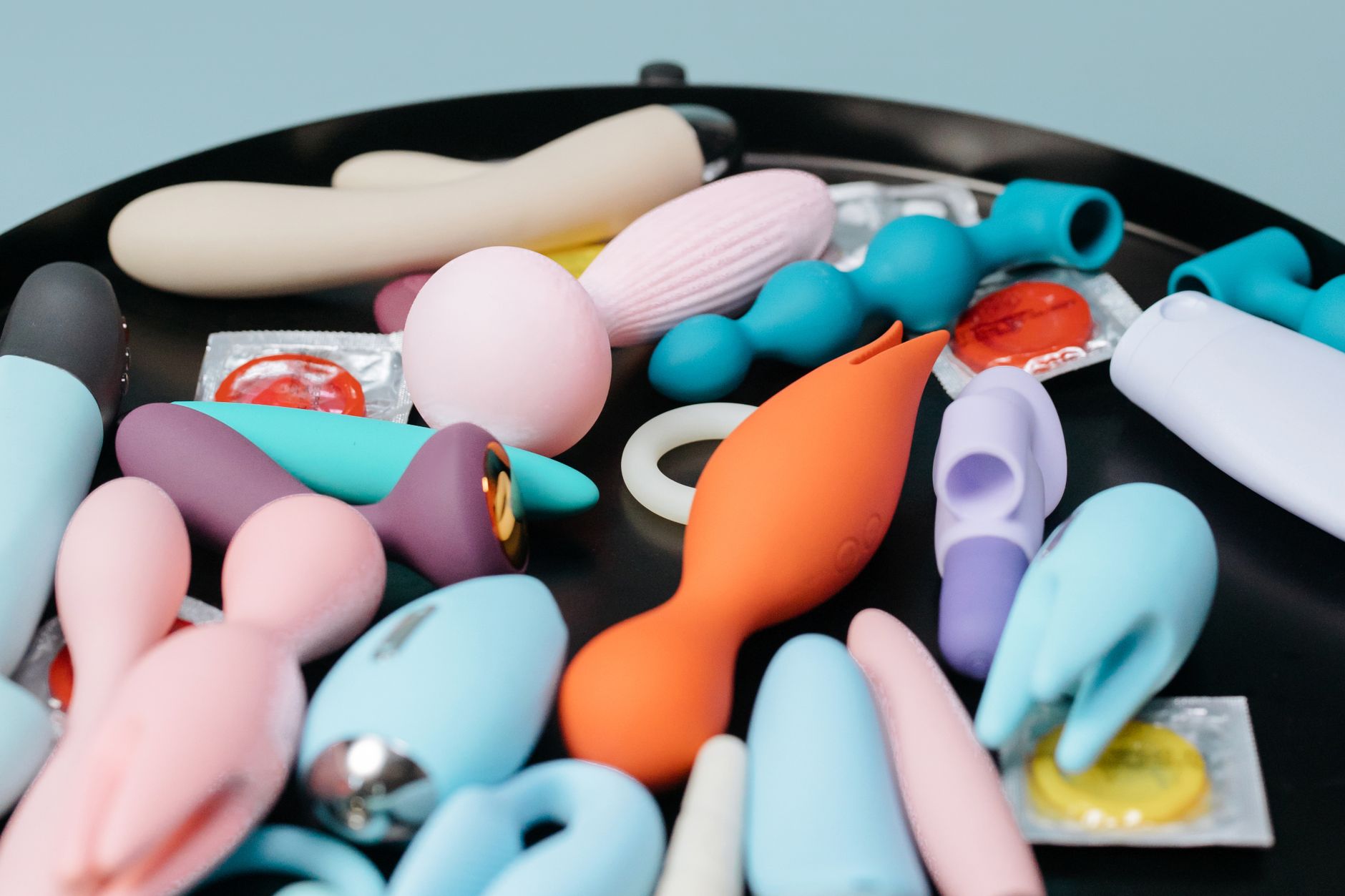
Let's be real about what happens to your body when anxiety shows up
Anxiety during intimacy is wildly common and almost never about not wanting sex. It's about the gap between what you think should happen and what's actually happening. Your brain gets locked into monitoring mode, which tanks arousal. The more you monitor, the worse it gets. The worse it gets, the more you panic. It's a loop that feels impossible to break.
Here's the thing: lemon vibrators interrupt that loop not by forcing relaxation, but by doing something much simpler. They demand your attention in a way that pulls focus away from performance and back into sensation. That shift is everything.
Why performance anxiety tanks pleasure in the first place
When you're anxious about orgasm, orgasm becomes impossible. This isn't a personal failing. This is neurology. The sympathetic nervous system (your threat-response system) is literally incompatible with arousal, which requires parasympathetic activation (your rest-and-digest system). You can't be in both states at once.
Anxiety during sex usually falls into three categories. First, there's the "Am I taking too long" anxiety that comes from internalizing messages that orgasm should be quick and easy. Second is "What if they lose interest in me" anxiety that pulls your attention outward toward your partner instead of inward toward sensation. Third is the "Is something wrong with my body" anxiety that shows up after a long break from sex, or after health changes, or just because intrusive thoughts are genuinely intrusive.
All three block arousal the same way: they shift you from sensing to judging. You stop feeling what's happening and start assessing whether it's happening right. That distinction matters because it explains why regular vibrators sometimes make anxiety worse. If you're already worried about performance, a standard vibrator can feel like another thing to perform with, another way to succeed or fail.
What lemon vibrators do differently
Lemon clitoral vibrators, particularly air-suction models like Hello Nancy's Lem, work with your nervous system in a specific way. The suction pattern creates a unique sensation that's almost impossible to fake a response to. You either feel it strongly or you don't. There's no gray area, no opportunity to perform, no room for your brain to negotiate with your body.
This sounds counterintuitive when you're already anxious. But it's actually liberating. Anxiety thrives in vagueness. It grows in the space between "maybe I felt that" and "I definitely felt that." Lemon vibrators eliminate that space. The sensation is so distinct that your nervous system simply responds. No thinking required.
The other thing that helps is the confidence that comes from a tool specifically designed for pleasure. There's something about using a clitoral vibrator that was engineered by people who understand arousal that shifts your internal narrative from "I hope this works" to "This is literally designed to work for me." That's not placebo. That's the difference between generic and intentional.
How to use a lemon vibrator when anxiety is present
If performance anxiety is your main obstacle, approach this differently than you would approach pleasure-seeking. You're not trying to come. You're trying to practice sensing.
Start with the lowest setting. This isn't because you need gentle (you probably don't). It's because a lower setting gives your brain something specific to focus on. It's easier to say "yes, I feel that" than "I'm not sure, maybe." As your nervous system settles, you can increase intensity. You're literally training your brain to believe that sensation is happening when it's happening.
Allow longer time than you think you need. Twenty to thirty minutes is reasonable when you're rewiring the anxiety response. Your nervous system needs time to shift from threat-mode to trust-mode. This isn't lost time. This is the practice itself.
Many people find it helpful to use a lemon vibrator solo first, without any goal or partner present. This removes one entire layer of performance pressure. You're not trying to come for anyone. You're not trying to come on a timeline. You're just learning what sensation feels like when your brain isn't monitoring the equation. Once your body remembers that pleasure can be simple, using a clitoral vibrator with a partner becomes much easier.
The partner dynamic when anxiety is in the room
If you have a partner, honesty about what's happening is non-negotiable. "I want to try using a vibrator because I get in my head" is a completely different conversation than introducing a vibrator randomly. The first one invites partnership. The second one can accidentally signal that something's wrong.
Many partners actually feel relieved when this gets named. They often internalize sexual anxiety as rejection. Knowing that anxiety is the problem, not the person, shifts the dynamic. You're not trying to fix your partner. You're both trying to fix the dynamic.
Some couples find that introducing a lemon vibrator together, with the explicit goal of "let's practice sensation over performance," transforms the entire experience. There's permission in that. Permission to slow down, permission to feel without needing to come, permission to be clumsy or uncertain. That permission is often what anxiety has been blocking all along.
What changes when you interrupt the anxiety loop
Once your nervous system learns that sensation is reliable and safe, several things happen at once. First, arousal returns faster. Your body stops bracing against threat. Second, orgasm usually becomes easier because you're not watching for it anymore. Third, and maybe most importantly, you start to trust your own body again.
Trust is what anxiety erodes most. Anxiety says "Your body is unreliable, better monitor it constantly." Lemon vibrators say "Your body responds exactly like it's supposed to." That contradiction is what breaks the loop.
Many people report that after a few weeks of using a clitoral vibrator specifically for anxiety management (not orgasm hunting), their baseline anxiety during intimacy drops even when they're not using the vibrator. This is because the nervous system has learned new information. It learned that sensation is safe. It learned that pleasure can be uncomplicated. It learned that feeling doesn't require performing.
When anxiety needs more than a tool
Lemon vibrators are tremendously helpful for performance anxiety and sensation-blocking anxiety. They're less helpful if your anxiety is rooted in trauma, relationship conflict, or certain medical conditions. If you're experiencing intrusive thoughts about safety, flashbacks, or deep distrust of your partner, a vibrator is a tool for one part of the solution, not the whole solution.
A therapist who specializes in sexual health or trauma can help you understand whether your anxiety is primarily about sensation and performance, or whether it's pointing to something that needs different support. Both are real. Both are treatable. The vibrator works best when it's one piece of a larger picture.
People also ask
Can a lemon vibrator make anxiety worse?
It can, but usually only if the pressure to orgasm intensifies or if you're using it as another way to perform. The magic of a clitoral vibrator is that it removes performance pressure, not adds it. If you're using it and thinking "I should be coming by now," you've accidentally recreated the original problem. The solution is to shift back to sensation-focused exploration with no outcome goal. Some people also find that starting with solo exploration rather than partner sex helps the nervous system settle more easily.
How long does it take for anxiety to decrease?
This varies, but most people notice a shift within two to four weeks of regular practice. Some notice it within days. The key is consistency and removing the success metric. You're not trying to come faster. You're trying to feel more reliably. Once that distinction lands, the anxiety usually starts releasing pretty quickly because your nervous system finally has evidence that it's safe.
Is using a lemon vibrator just avoidance?
Not if you're using it intentionally to practice a skill. Avoidance is using a vibrator so you don't have to face the anxiety. Practice is using a vibrator to teach your body that sensation is reliable. The difference is in your internal narrative. If you're thinking "This is how I learn to trust my body," that's practice. If you're thinking "This is how I avoid the thing that scares me," that's avoidance. One builds confidence. The other doesn't.
Should I use a lemon vibrator with my partner right away?
There's no single right answer, but most therapists recommend solo exploration first. This lets your nervous system learn that the tool works without any additional pressure. Once you've practiced alone and your anxiety has started shifting, introducing it with a partner usually goes much more smoothly. Your partner also benefits from seeing your confidence before they're involved.
What if I'm anxious about using a vibrator at all?
That's worth exploring with curiosity rather than judgment. Sometimes anxiety about vibrators is actually anxiety about pleasure, or about deserving pleasure, or about being seen as sexual. Sometimes it's about specific sensations or loss of control. Naming what specifically feels scary ("I don't like losing control" vs. "I'm worried it's too intense" vs. "I feel embarrassed") usually reveals a much smaller problem to solve. Start with the smallest version of the thing you're avoiding. Maybe that's just holding a vibrator without using it. Maybe it's turning it on without touching yourself with it. Building slowly gives your nervous system time to adjust.
Can lemon vibrators help if I'm on anxiety medication?
Yes. Some anxiety medications can affect arousal slightly, but they don't eliminate your capacity for sensation. Many people using SSRIs report that clitoral vibrators help them access pleasure more easily because the distinct sensation cuts through any arousal-dampening effects. The suction pattern in particular seems to work well because it doesn't rely on friction or pressure, which is where medication effects show up most. Talk to your prescriber if arousal changes feel significant, but this isn't typically a reason to avoid vibrators.
Anxiety during sex isn't a personal failure. It's not a sign that something's wrong with you or your body. It's just your nervous system trying to protect you from what it perceives as threat. Lemon vibrators work because they give your nervous system new information: sensation is safe, pleasure is reliable, and your body responds exactly as it should. That's not magic. That's neurology. And it's completely within your control.